P. T. Usha
From humble beginnings to becoming one of India’s greatest track-and-field athletes, and then a builder of future talent.
Early life & background
-
P.T. Usha’s full name is Pilavullakandi Thekkeparambil Usha.
-
She was born on 27 June 1964 in the village of Koothali, near Perambra, in the Kozhikode district of Kerala, India.
-
She grew up in modest circumstances, her family being of limited means. She faced early health and financial challenges.
-
Her sporting talent was spotted early: during her schooling she participated in athletics and showed promise.
-
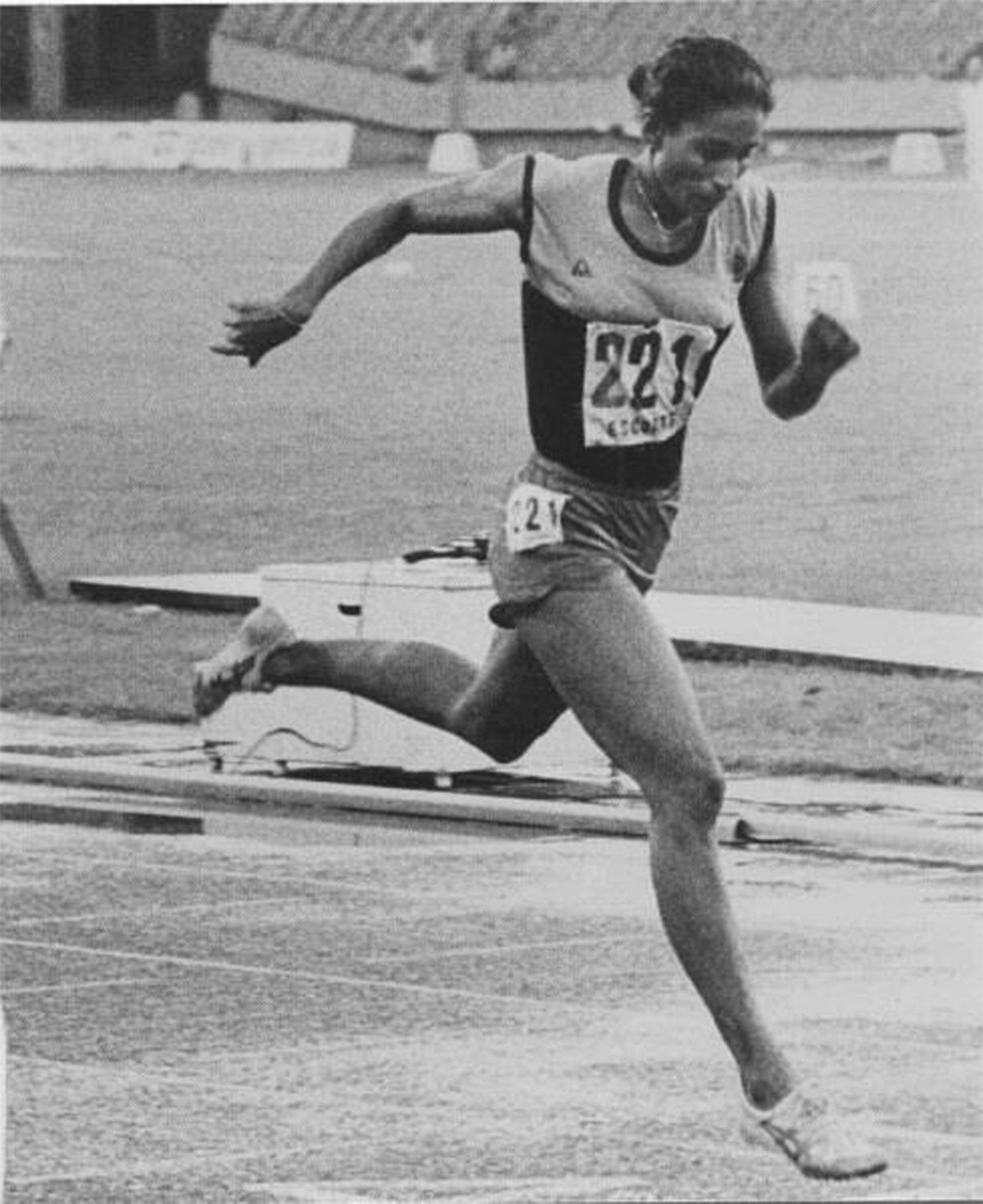
In 1976, the Kerala government started a sports division for girls in Kannur; Usha joined under coach O.M. Nambiar and began formal training.
Rise in athletics
-
In 1979 she took part in the National School Games and won the individual championship, marking her arrival on the national scene.
-
Her international debut came in around 1980 (the Pakistan Open National Meet in Karachi) where she won four gold medals for India.
-
At the 1980 Moscow Olympics she represented India, though she did not win medals yet.
Peak years and major achievements
-
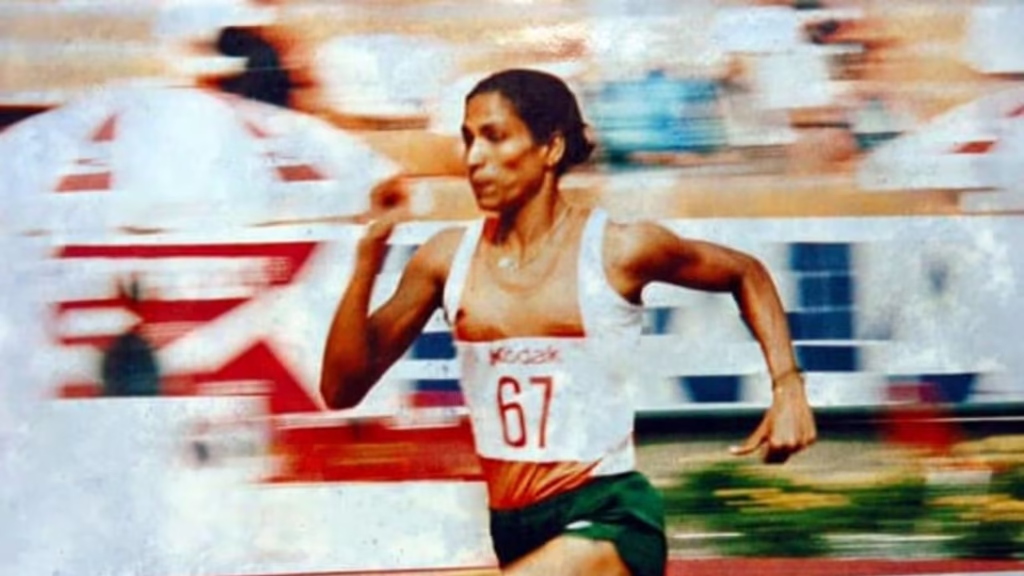
At the 1982 Asian Games held in New Delhi, she won silver in the 100m and 200m sprints.
-
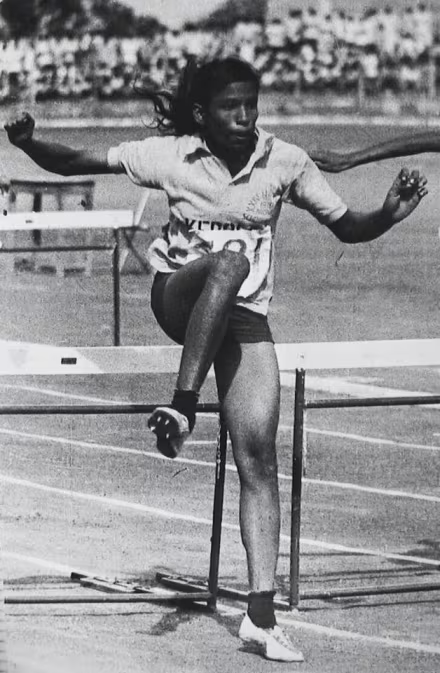
In 1984, at the 1984 Summer Olympics in Los Angeles, she made history by becoming the first Indian woman to reach the final of an Olympic track event (400 m hurdles). She narrowly missed the bronze medal by one-hundredth of a second.
-
Her timing in that 400 m hurdles event was 55.42 seconds, which remains the Indian national record.
-
At the 1985 Asian Track & Field Championships in Jakarta, she won 5 gold medals and 1 bronze.
-
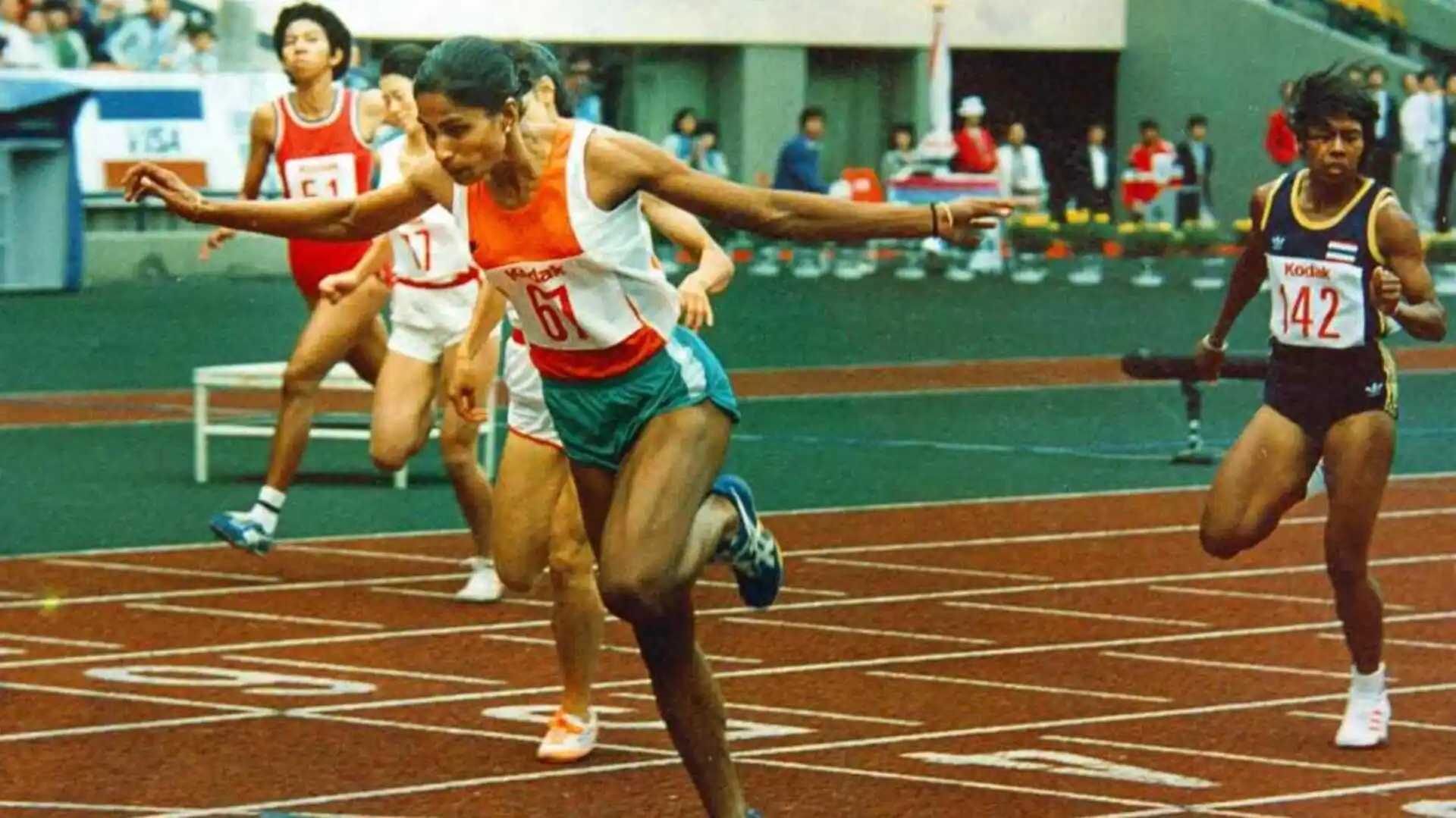
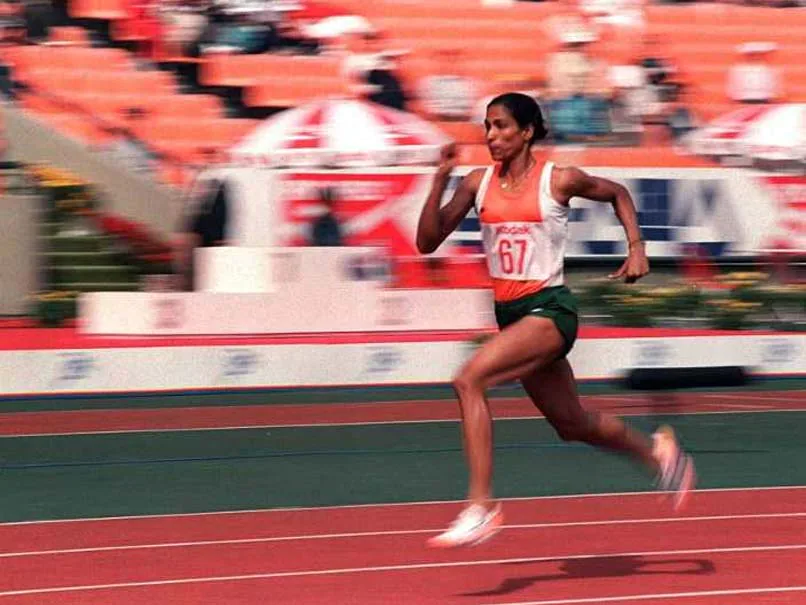
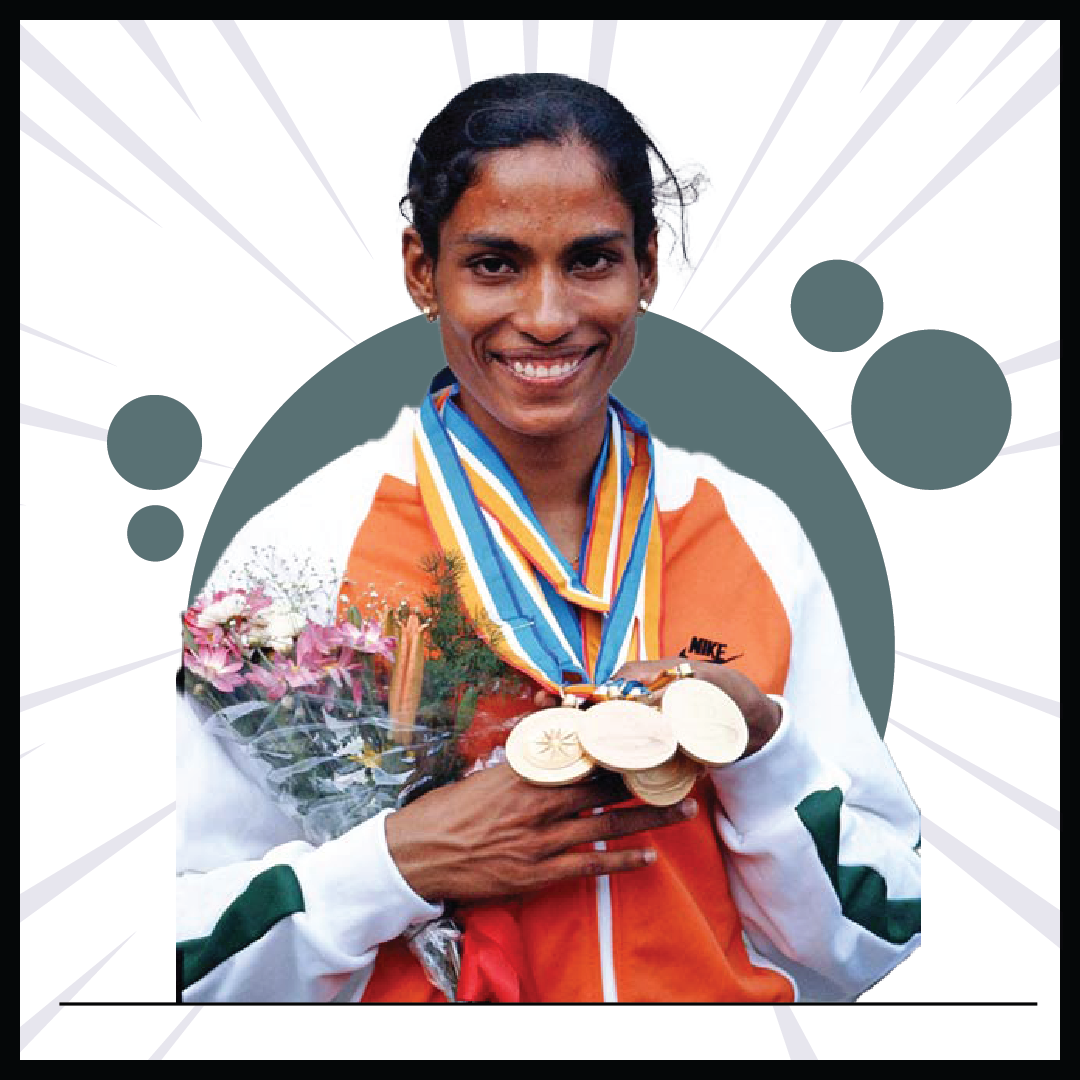
At the 1986 Asian Games in Seoul, she won four gold medals and one silver, and set new Asian Games records in all the events in which she competed.
Style, reputation & nicknames
-
She was popularly known as the “Golden Girl” and the “Payyoli Express” (after her birthplace Payyoli) because of her speed and dominance in Indian women’s athletics.
-
Her career became symbolic of resilience, especially for women’s sport in India: coming from a small village, rising to near the very top, breaking barriers.
Later career & transition
-
Although she never won an Olympic medal, her Olympic performance in 1984 is still seen as a watershed in Indian athletics.
-
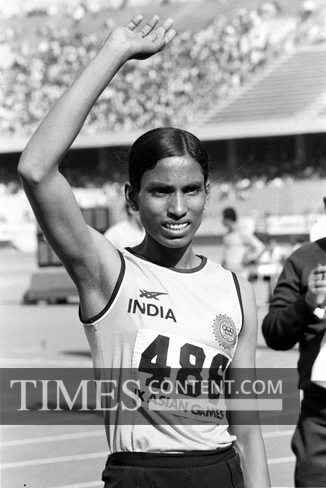
She continued competing into the late 1980s and 1990s. For example, in 1998 at the Asian Championships in Fukuoka, she won bronze medals in the 200 m and 400 m at age 34, demonstrating longevity.
-
She officially retired from competitive athletics around the year 2000.
Awards, honours & impact
-
She received the Arjuna Award (India’s sports honour) in 1984.
-
She was awarded the Padma Shri (one of India’s highest civilian honours) in 1985.
-
In July 2022, she was nominated as a Member of the Rajya Sabha (the Upper House of India’s Parliament) on a sports quota nomination.
-
In December 2022, she became the President of the Indian Olympic Association (IOA), the first woman to hold that post.
Legacy & contributions beyond competing
-
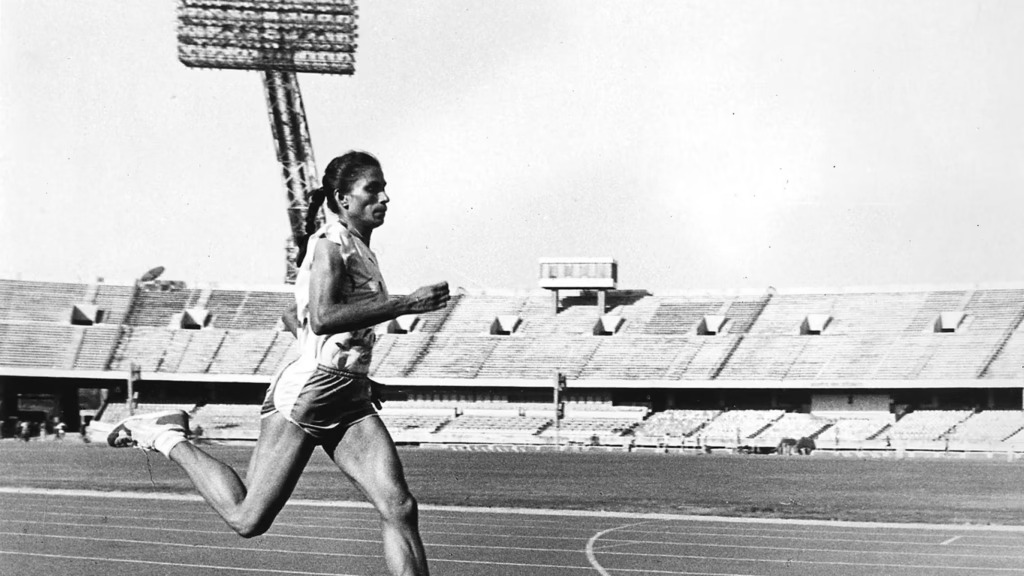
In 2002, Usha founded the Usha School of Athletics in Kinalur, Kozhikode, Kerala—dedicated to training young athletes, particularly girls, in track & field.
-
Her story inspired generations of Indian athletes, especially women, showing that athletes from rural or small-town backgrounds could reach international levels.
-
Through her academy and her ongoing involvement in sports administration, she continues to influence Indian athletics.
Key records & statistics
-
Personal best in 100 m: 11.39 seconds.
-
Personal best in 400 m hurdles: 55.42 seconds (Indian national record).
-
Her dominance in Asian competition: For example, 13 gold medals between 1983-89 in Asian Track & Field meets.
Challenges & memorable moments
-
The heartbreak of narrowly missing an Olympic medal in 1984 remains a defining moment.
-
Coming from a modest financial background and from a small village, she relied on natural talent and a dedicated coach (O.M. Nambiar) to make it.
-
Longevity: returning after breaks, competing successfully later in career (late-30s), transitioning into mentorship.
Why she matters
-
P.T. Usha is often called the “Queen of Indian track & field” and is widely regarded as one of India’s first true modern sports icons.
-
Her achievements helped elevate the profile of Indian women’s athletics.
-
Her legacy is not only in her medals but also in her role as a mentor and administrator shaping the next generation.





 English