Shadows on the Podium: Deconstructing NADA’s Battle for Clean Sports in India
India’s rise as a global sporting powerhouse is undeniable. From the athletics track to the wrestling mat, Indian athletes are breaking barriers. But behind the glitz of gold medals lies a fierce, often invisible war against the scourge of performance-enhancing drugs. At the absolute epicenter of this battle stands NADA India (National Anti-Doping Agency).
To truly understand Indian sports today, one must understand how NADA operates, where it succeeds, and the massive challenges it continues to fight.
🏛️ The Anatomy of NADA: How It Works
Established in 2005 as an autonomous body under the Ministry of Youth Affairs and Sports, NADA’s mandate is simple yet gargantuan: to implement anti-doping rules and promote clean sports in a nation of over 1.4 billion people.
To achieve this, NADA operates on a multi-pronged Work Style governed by the strict World Anti-Doping Agency (WADA) code:
1. The Sword: Testing and Investigations
NADA doesn’t just test athletes during competitions; its most potent weapon is Out-of-Competition (OOC) testing.
-
The RTP (Registered Testing Pool): Elite athletes must provide their “whereabouts”—specifying a 60-minute window every single day where they can be located for no-notice testing.
-
Intelligence-Led Testing: Moving away from blind random testing, NADA has heavily invested in Intelligence & Investigations (I&I), collaborating with bodies like INTERPOL to target high-risk sports and follow up on whistleblower tips.
2. The Shield: Education and Awareness
You cannot police your way to a clean sporting culture; you have to educate. NADA’s educational arm has become massive:
-
Digital Tools: The “Know Your Medicine” (KYM) app helps athletes check if a purchased drug contains banned substances.
-
Massive Outreach: From regional languages to Braille leaflets for para-athletes, NADA has pushed the “Play True” message down to the grassroots, reaching thousands of budding athletes at events like the Khelo India Games.
3. The Scale: Results Management
When an athlete tests positive—known as an Adverse Analytical Finding (AAF)—NADA doesn’t act as judge and jury. The case goes to an independent Anti-Doping Disciplinary Panel (ADDP), and appeals go to the Anti-Doping Appeal Panel (ADAP), ensuring a separation of powers and legal fairness.
📈 The Success Story: Measuring NADA’s Impact
Success in anti-doping is a paradox. Is catching more cheats a sign of success, or a sign of a massive problem? For NADA, success is defined by an increase in capability, transparency, and the dismantling of a culture of ignorance.
🌟 1. The Statutory Teeth: The Anti-Doping Act 2022
For years, NADA operated as a registered society, meaning its rules were contractually binding but lacked legislative weight. The passing of the National Anti-Doping Act in 2022 was a watershed moment. It gave NADA statutory backing, formalized the rights of athletes, and empowered the agency to carry out raids and investigations with legal authority.
🌟 2. Massive Expansion of Testing
NADA has dramatically scaled its operations to match the size of the Indian athletic ecosystem:
-
In 2023, NADA conducted 5,794 dope tests.
-
In 2024, that number jumped to 7,474.
-
The planned target sits at over 7,700+ tests, driven by the digitalization of test planning via the NADA India Data Administration and Management System (NIDAMS).
🌟 3. Bringing the Giants to Heel
For years, the Board of Control for Cricket in India (BCCI) operated its own internal anti-doping mechanisms. In a massive victory for uniform sports governance, NADA successfully brought Indian cricket under its jurisdiction in 2019, ensuring that even the nation’s wealthiest athletes are subject to the same rigorous testing protocols as everyone else.
⚠️ The Paradox of High Numbers: A Looming Challenge
While NADA’s operational capacity has grown by leaps and bounds, global WADA reports have frequently placed India at or near the top of the list for the highest number of doping violations globally.
In 2024 alone, over 260 Indian athletes tested positive for banned substances, heavily concentrated in physical disciplines like Athletics, Weightlifting, and Wrestling.
However, looking deeply at these numbers reveals two distinct truths:
-
More testing naturally equals more caught offenders. NADA is aggressively weeding out the problem rather than sweeping it under the rug.
-
The supplement crisis is real. A vast majority of Indian athletes test positive due to “inadvertent doping”—consuming unregulated, contaminated dietary supplements or trusting local trainers who advise them to take ‘dope-free’ products that are actually spiked with steroids.
To combat this, NADA has launched the Centre of Excellence for Nutritional Supplements Testing (CoE-NSTS) in Gujarat to create a safer environment for athletes purchasing supplements.
🏁 The Verdict
NADA India has evolved from a small, resource-strapped society into a legally backed, highly digitized enforcement agency. Its success isn’t just marked by the athletes it catches, but by the systemic reforms it has pushed through over the last few years. The road to completely clean sports in India is long, but NADA is laying down the asphalt.
What are your thoughts on India’s fight against doping? If you are looking to build out more content on this topic, I can help you outline a follow-up piece. Would you like me to generate a set of interview questions for an athlete on this subject, or perhaps a script for a short awareness video about supplement safety?
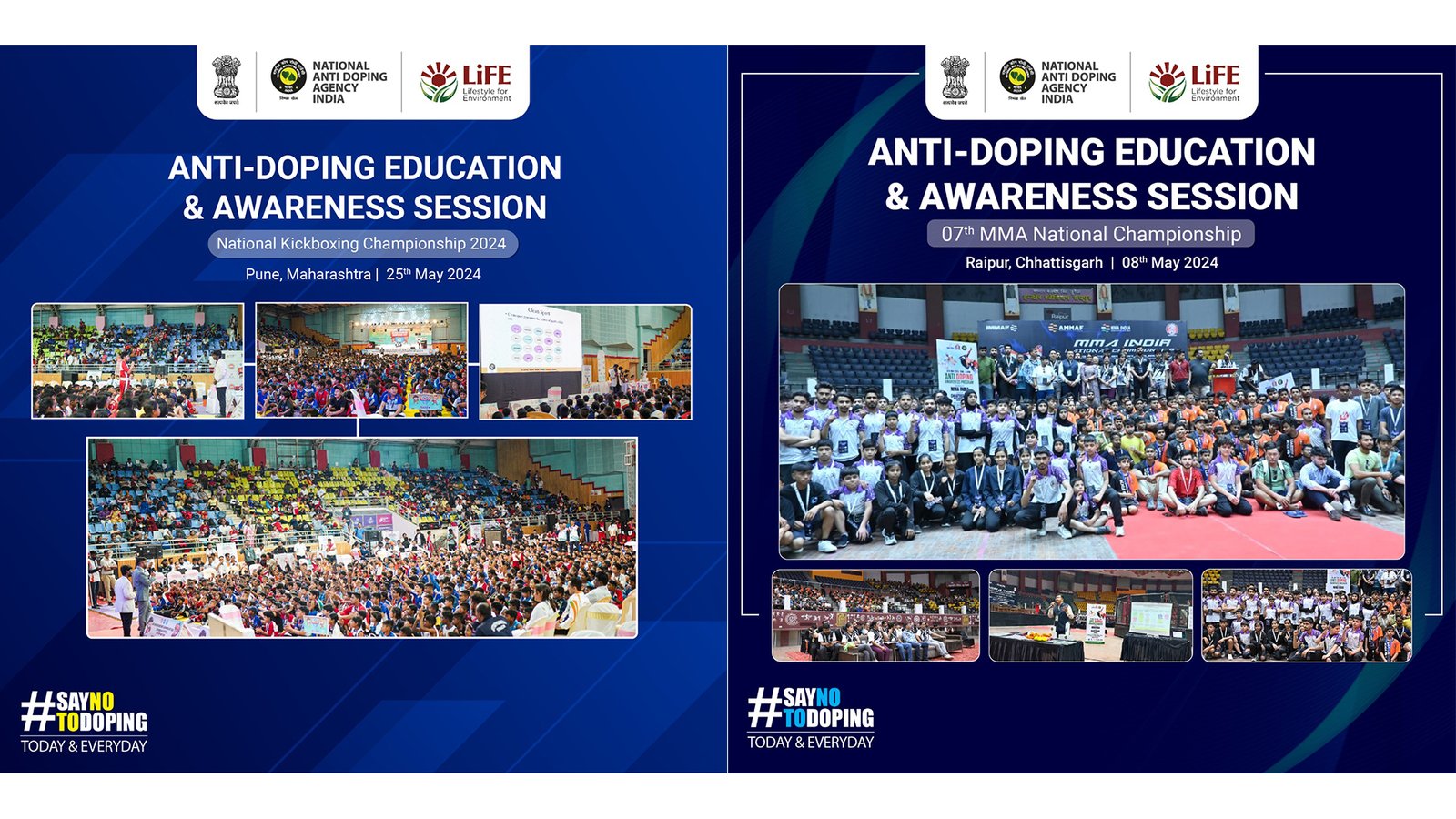
NADA India conducted Anti-Doping Education and Awareness activities
https://nadaindia.yas.gov.in





 English