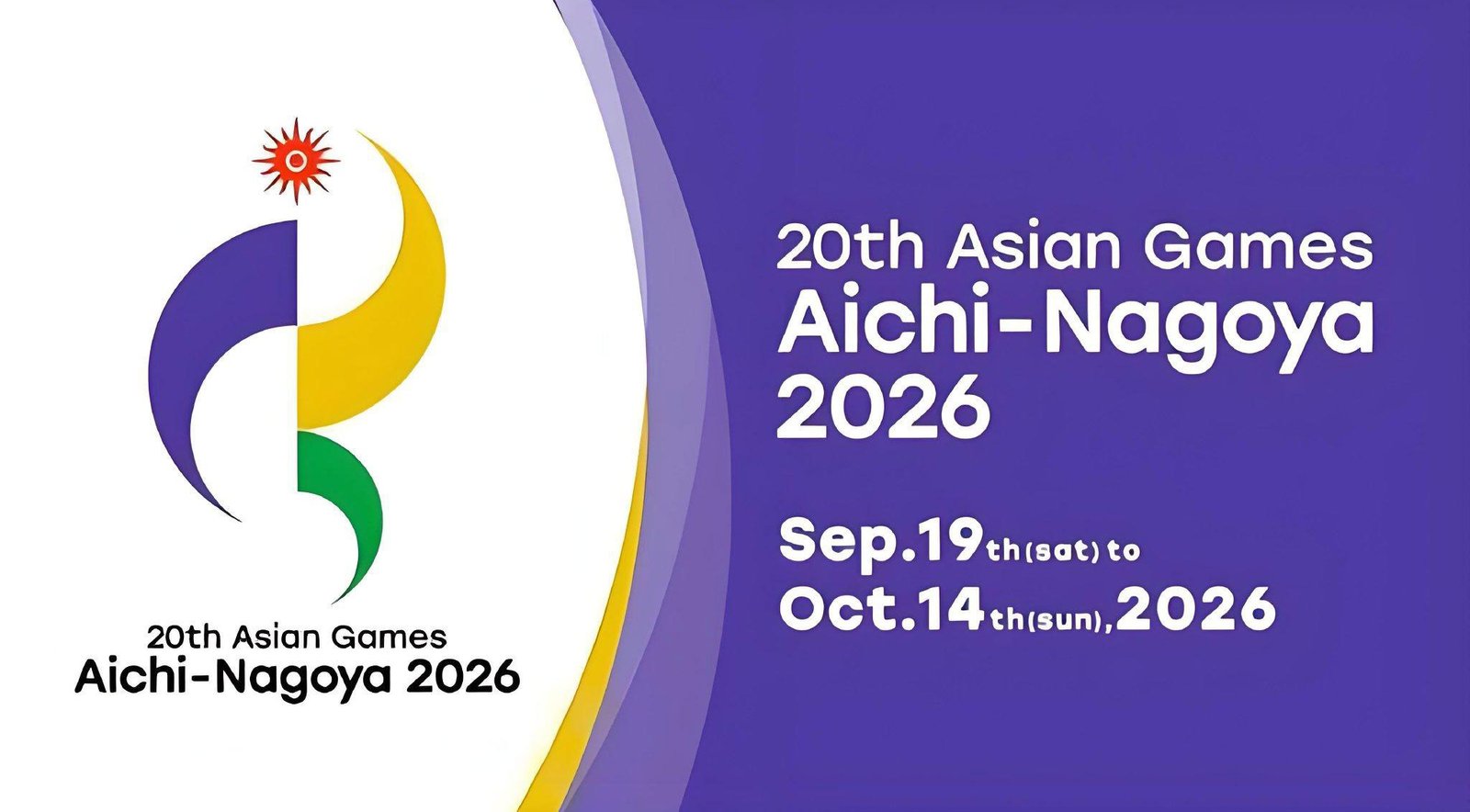
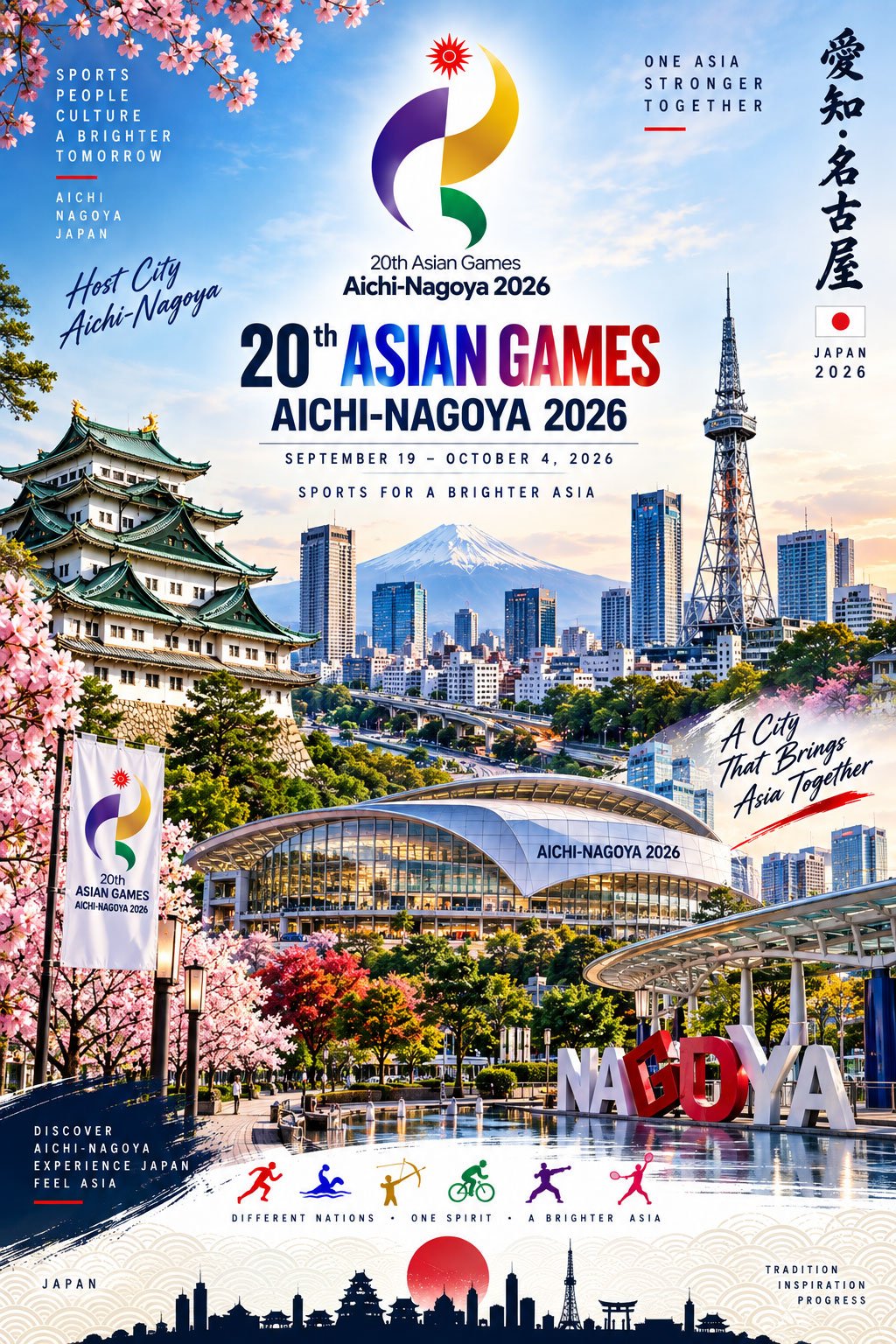
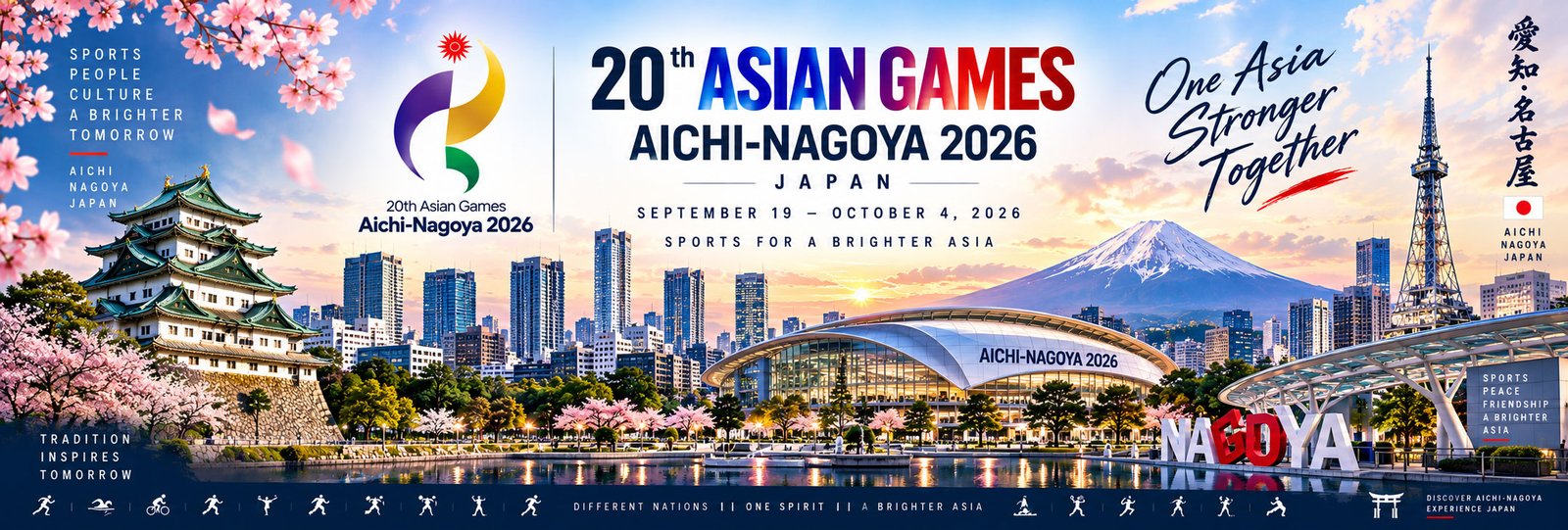
The 20th Asian Games will bring thousands of athletes from across Asia together in Aichi-Nagoya, Japan, from September 19 to October 4, 2026, for 16 days of competition, ambition, national pride and unforgettable sporting moments.
The countdown is almost over.
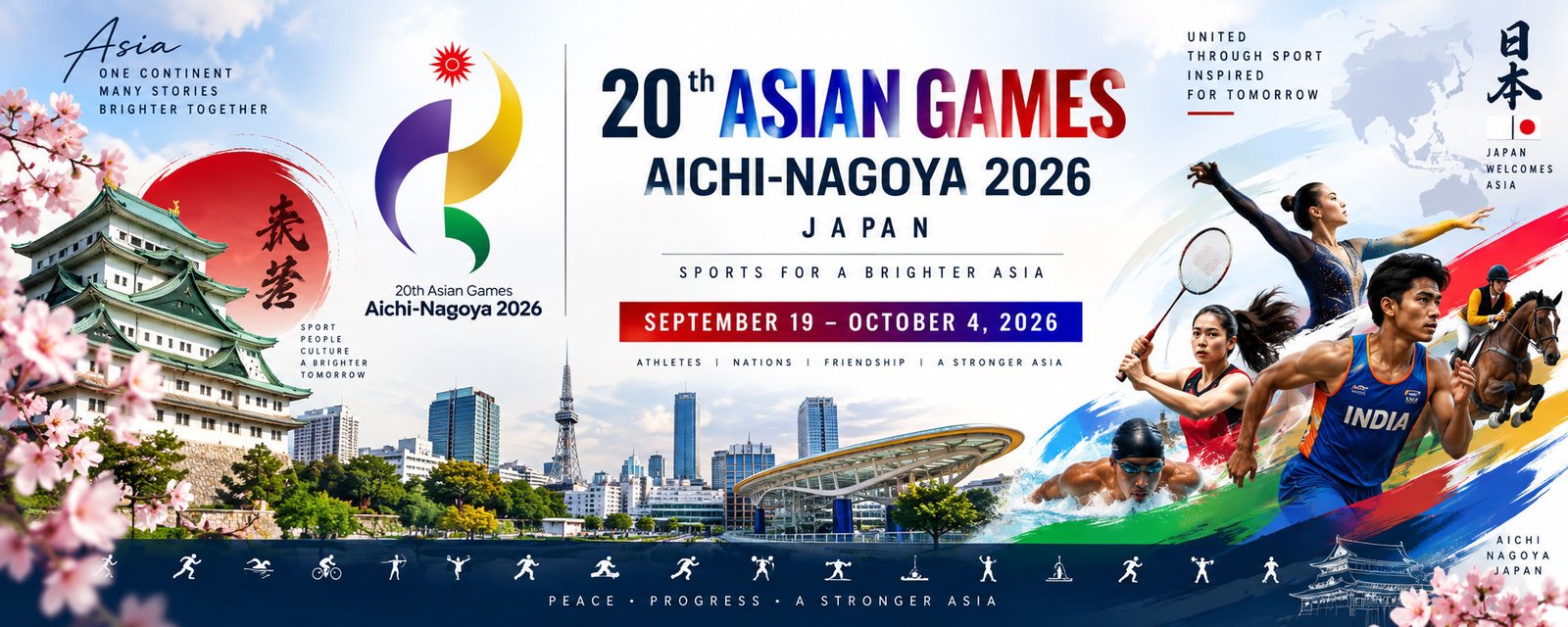
On September 19, 2026, the sporting spotlight of Asia turns toward Aichi and Nagoya, Japan, as the 20th Asian Games Aichi-Nagoya 2026 officially begin. The Games will continue through October 4, creating 16 days of competition across a huge programme of Olympic and Asian sports.
For athletes, coaches, teams and fans, the Asian Games represent much more than another international sporting competition. They provide a major stage where established champions, emerging talents and future stars compete alongside one another under the flags of Asia’s nations.
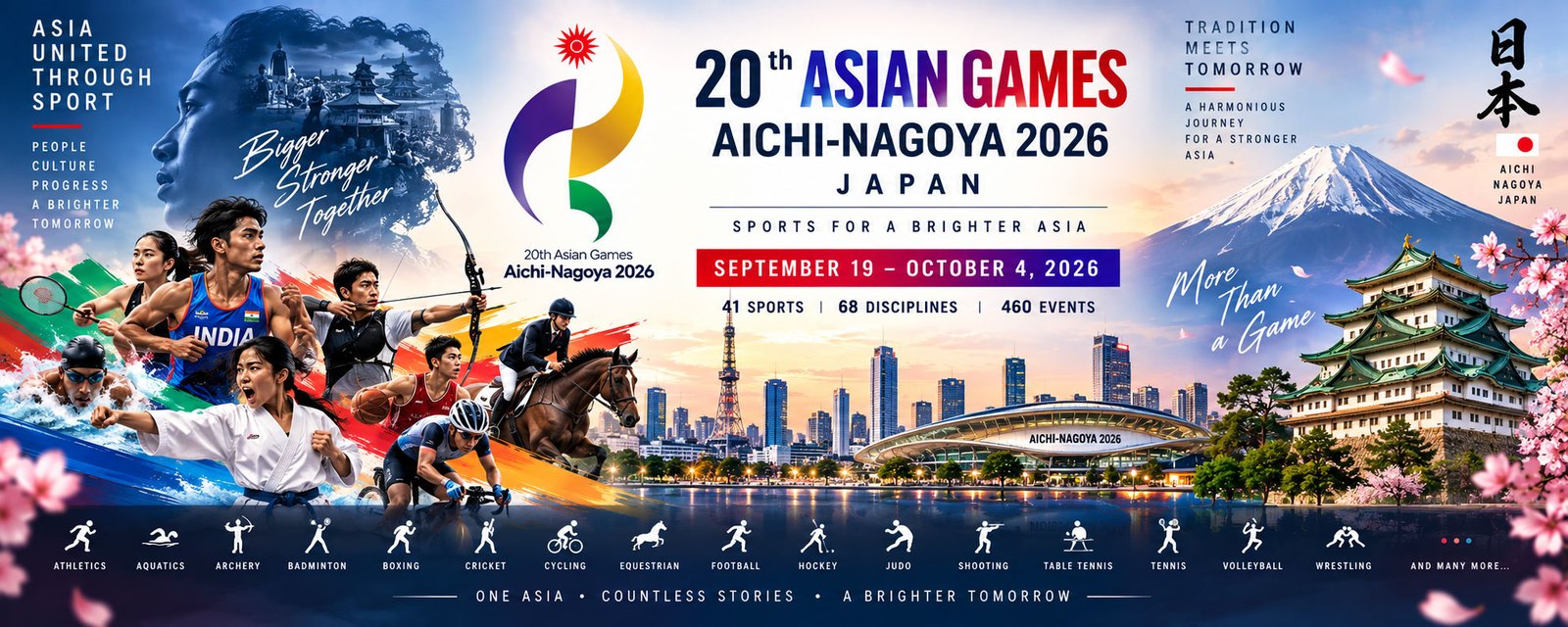
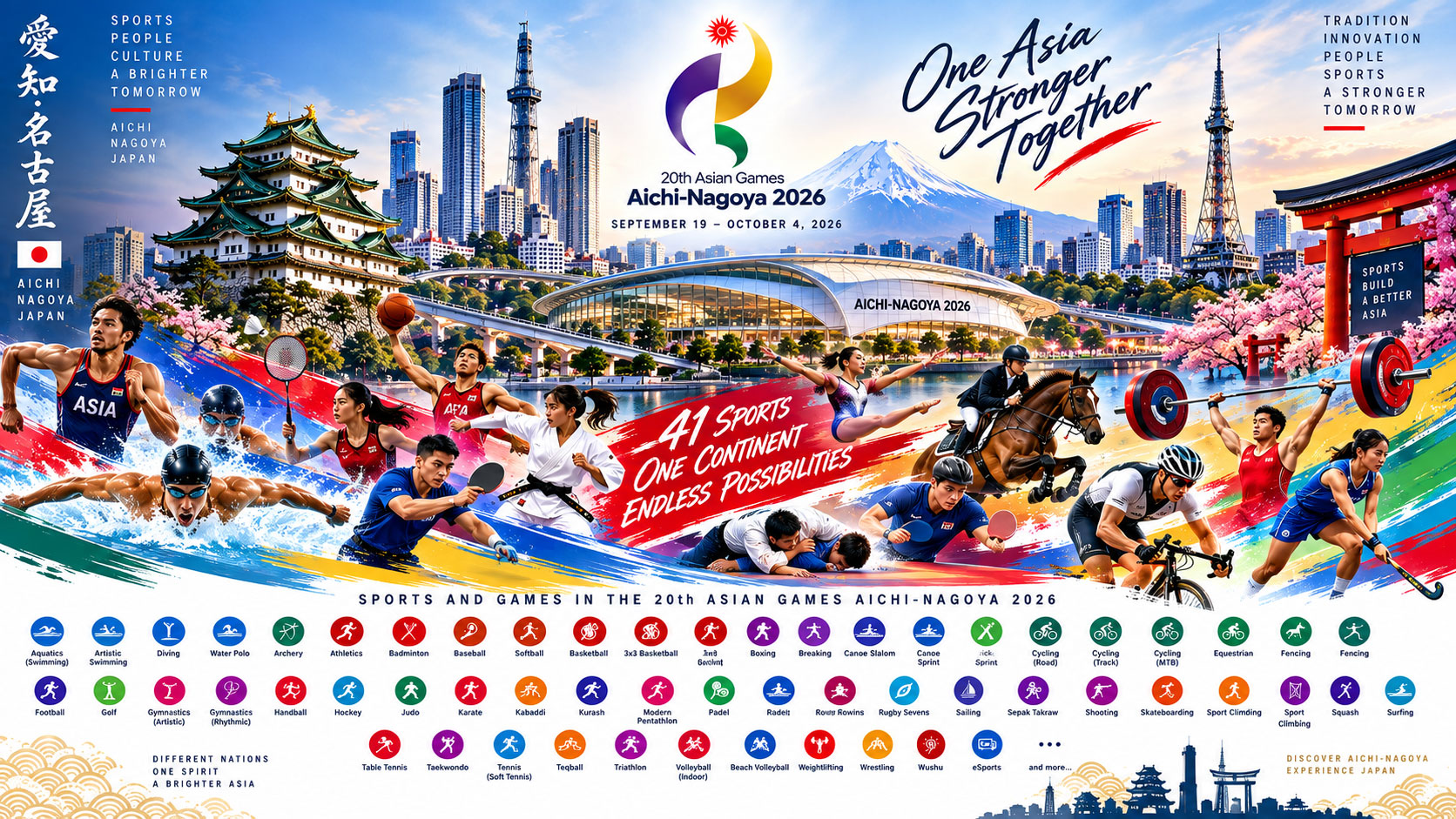
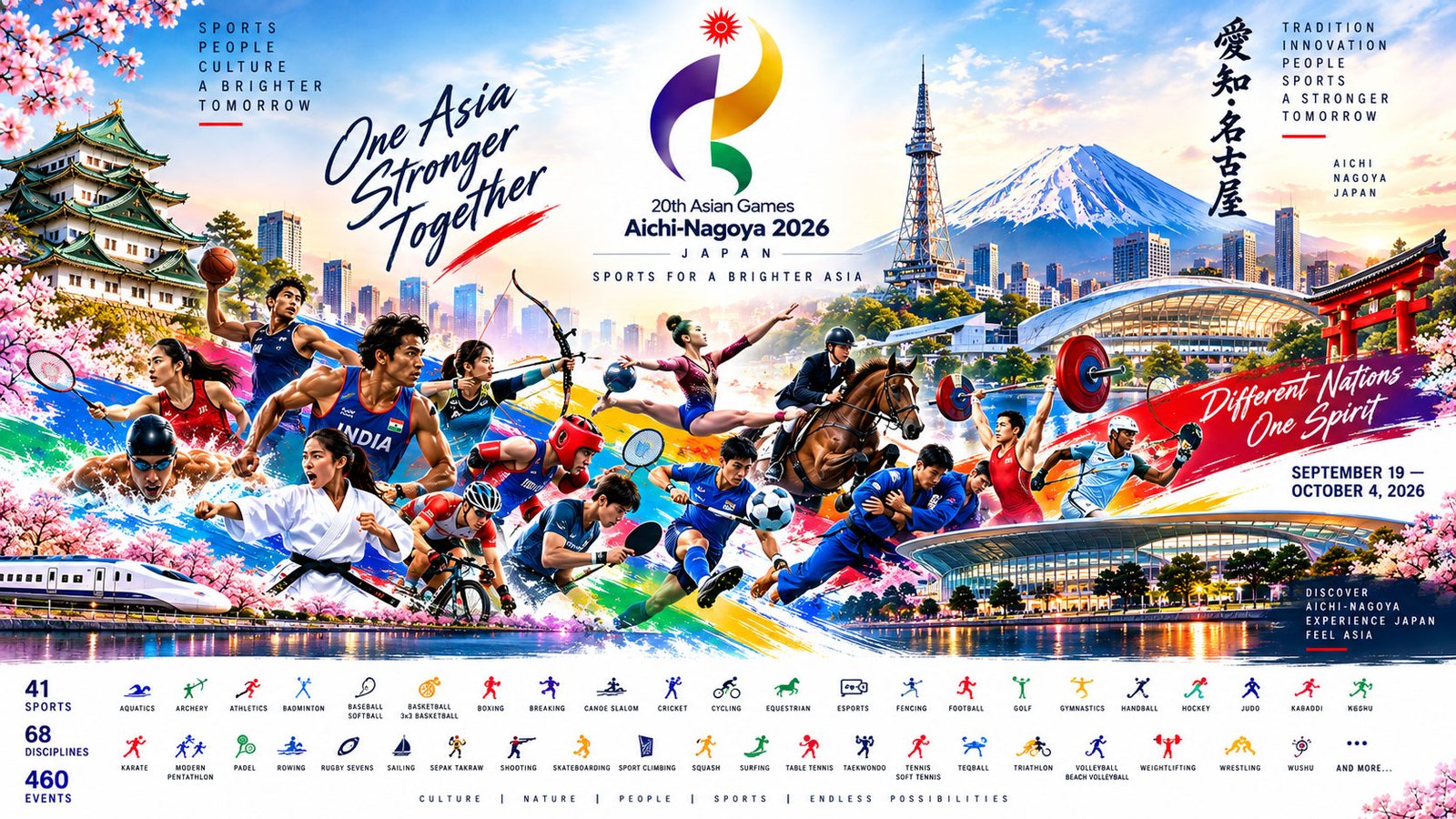
The official programme approved by the Olympic Council of Asia includes 41 sports, 68 disciplines and 460 events, featuring 217 men’s events, 204 women’s events and 39 mixed events.
Aichi-Nagoya 2026: A New Chapter in Asian Sport
The Aichi-Nagoya Asian Games arrive as one of the biggest multi-sport events on the Asian sporting calendar.
The host region combines the modern urban environment of Nagoya with the wider sporting infrastructure of Aichi Prefecture, creating a Games spread across numerous competition venues.
The official organisers describe the event as an opportunity to bring athletes from across Asia together for competition and achievement, while also showcasing Japanese hospitality, technology and sporting culture.
Japan has previously hosted the Asian Games in Tokyo in 1958 and Hiroshima in 1994. Aichi-Nagoya 2026 therefore marks Japan’s third hosting of the continental multi-sport event.
16 Days of Competition, 41 Sports and Hundreds of Events
One of the defining features of Aichi-Nagoya 2026 is the breadth of its sporting programme.
The official OCA programme lists 41 sports, covering disciplines ranging from athletics and swimming to archery, badminton, boxing, cricket, cycling, equestrian, football, hockey, judo, kabaddi, shooting, wrestling and wushu.
The official Aichi-Nagoya sports programme also includes newer and emerging sporting disciplines such as breaking, esports, skateboarding, sport climbing, surfing, teqball and padel.
This combination of traditional Asian sports, Olympic disciplines and newer formats reflects the changing landscape of international sport.
Sports scheduled at Aichi-Nagoya 2026 include:
- Aquatics
- Archery
- Athletics
- Badminton
- Baseball & Softball
- Basketball & 3×3 Basketball
- Boxing
- Breaking
- Canoe/Kayak
- Cricket
- Cycling
- Equestrian
- Esports
- Fencing
- Football
- Golf
- Gymnastics
- Handball
- Hockey
- Judo
- Kabaddi
- Karate
- Modern Pentathlon
- Padel
- Rowing
- Rugby Sevens
- Sailing
- Sepak Takraw
- Shooting
- Skateboarding
- Sport Climbing
- Squash
- Surfing
- Table Tennis
- Taekwondo
- Tennis & Soft Tennis
- Teqball
- Triathlon
- Volleyball & Beach Volleyball
- Weightlifting
- Wrestling
- Wushu
The organiser’s current venue information lists 43 sports categories/entries, while the OCA’s approved 2025 programme lists 41 sports; this reflects differences in how disciplines and combined sports are presented in the respective official materials.
Japan Prepares a Multi-Venue Sporting Festival
Aichi-Nagoya 2026 will use a broad network of competition venues.
The official venue plan lists 53 competition venues, with events taking place across Aichi and beyond, including facilities in Nagoya, Okazaki, Toyota, Toyohashi, Kasugai, Anjo, Gamagori and other locations.
Some sports will be staged at iconic and purpose-built venues.
Athletics, for example, is scheduled at Nagoya City Mizuho Park Athletic Stadium, while football will use venues including Toyota Stadium and Nagoya City Mizuho Park Rugby Field. Equestrian competitions will be held at Equestrian Park.
Aquatic competitions will use venues including the Tokyo Aquatics Centre and Hamamatsu Swimming Center, while surfing is scheduled at Pacific Long Beach in Tahara, Aichi.
This geographical spread gives the Games a regional character rather than concentrating every competition in a single stadium.
India at the Asian Games: Another Major International Stage
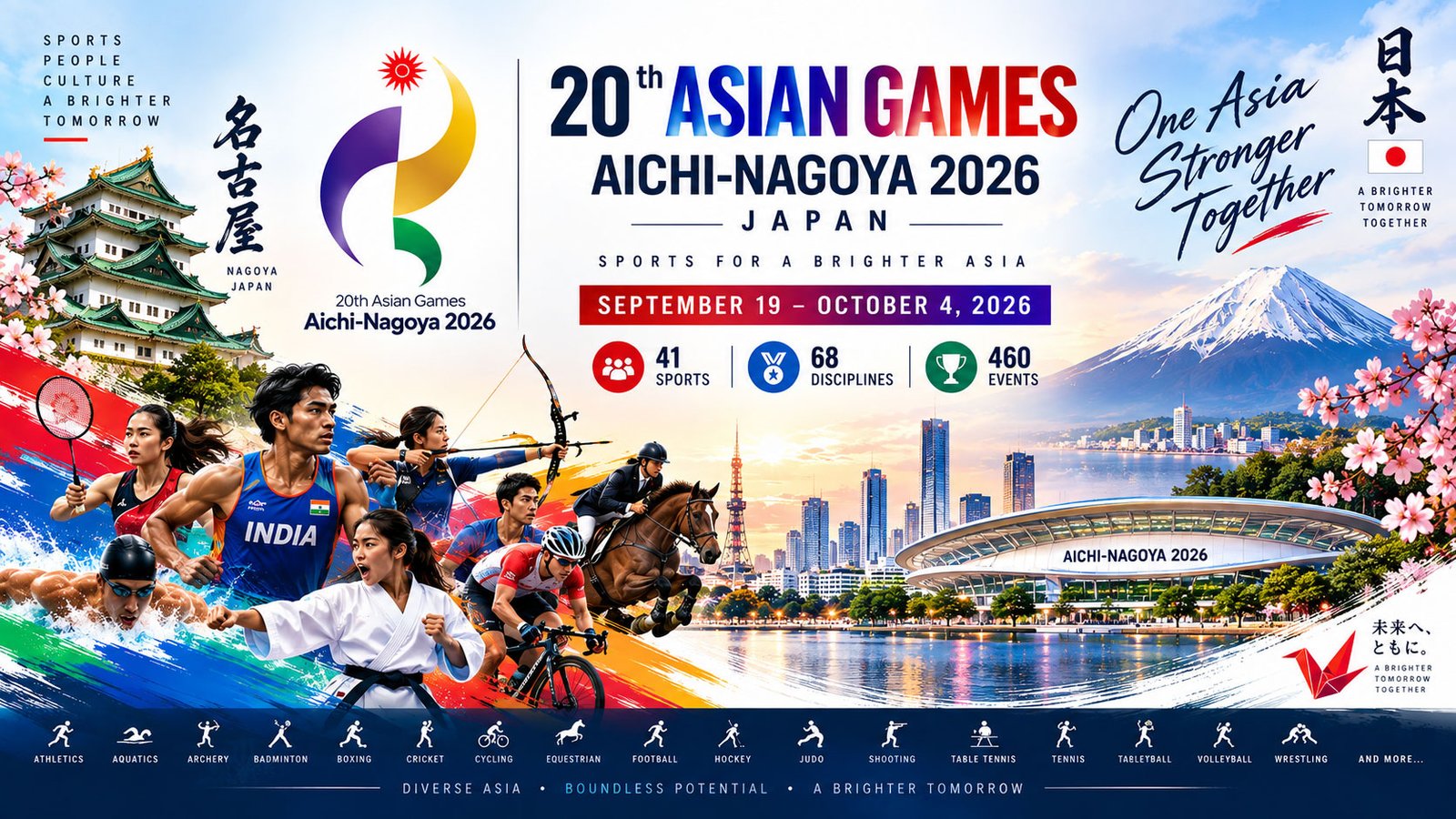
For Indian sport, the Aichi-Nagoya Games represent another important opportunity for athletes to compete at the highest level in Asia.
India has a long history at the Asian Games, with Indian athletes competing across athletics, shooting, wrestling, boxing, badminton, archery, hockey, weightlifting, wrestling, shooting, equestrian sport and many other disciplines.
The 2026 edition will again put Indian athletes into competition with leading sporting nations and established Asian powers.
For India’s younger athletes, the Games can also serve as an important international platform to gain experience against competitors from across the continent.
The Asian Games environment is particularly significant because many sports bring together athletes who also compete at Olympic, World Championship and Asian Championship level.
The Rise of New Sports
Aichi-Nagoya 2026 also demonstrates how the Asian Games continue to evolve.
The inclusion of sports and disciplines such as esports, breaking, skateboarding, sport climbing, surfing, teqball and padel gives the event a connection with younger audiences and newer sporting cultures.
At the same time, the programme retains sports deeply connected to Asian sporting traditions.
Kabaddi, sepak takraw, wushu, kurash and jiu-jitsu are among the disciplines that contribute to the distinctive identity of the Asian Games. The OCA’s earlier decisions specifically identified sports representing different parts of Asia, including kurash from Central Asia, wushu from East Asia, kabaddi from South Asia, sepak takraw from Southeast Asia and jiu-jitsu from West Asia.
This mixture makes the Asian Games different from a conventional Olympic-style programme,
Equestrian Sport Takes Its Place on the Asian Stage
Equestrian sport will again form part of the Aichi-Nagoya programme.
The official venue plan lists dressage, eventing and jumping, with competitions scheduled at Equestrian Park.
For equestrian athletes, the Asian Games provide an important continental championship environment combining technical precision, horse-and-rider partnership and international competition.
The inclusion of equestrian sport also connects Aichi-Nagoya with India’s growing interest in international riding and jumping competitions.
Technology, Tradition and the Future of Sport
Aichi-Nagoya 2026 is being organised around several concepts including:
Putting athletes first.
Using existing facilities.
Making full use of state-of-the-art technology.
Celebrating Japanese tradition and hospitality.
Contributing to the spread of sports culture.
These themes reflect the changing expectations surrounding major sporting events.
Modern Games are no longer simply about stadiums and medals. They increasingly involve digital experiences, advanced broadcasting, technology-driven competition environments and new ways for audiences to follow athletes.
Beyond the Medals
Every Asian Games produces medal tables, records and champions.
But behind every medal is another story.
There are athletes returning from injury.
Young competitors experiencing their first major continental Games.
Veterans competing in what may be their final Asian Games.
Coaches preparing athletes for years for a few minutes of competition.
Families travelling across borders to support their athletes.
And teams representing countries with different sporting traditions, cultures and histories.
That human element is what transforms the Asian Games from a collection of competitions into a continental sporting story.
A Global Audience Watches Asia
The Asian Games have grown into one of the world’s major multi-sport events.
With thousands of athletes and officials involved, the scale extends far beyond the competition venues. The official Games planning documents anticipated large numbers of athletes, team officials, technical officials, media personnel, volunteers and other Games personnel.
For broadcasters, digital publishers and sports storytellers, Aichi-Nagoya 2026 offers thousands of potential stories.
From an athlete’s preparation to the final medal ceremony, every sport has its own narrative.
The Road to September 19
With the Opening Ceremony approaching, athletes and teams are entering the final phase of preparation.
Training sessions become more focused.
Travel plans are finalised.
Equipment is checked.
Competition strategies are refined.
And athletes begin turning years of preparation into a few crucial days of competition.
On September 19, the waiting ends.
The 20th Asian Games Aichi-Nagoya 2026 begin.
What to Watch at Aichi-Nagoya 2026
The Games will offer storylines across almost every category of sport.
🏹 Archery
Individual precision, team competition and the pressure of elimination rounds will make archery one of the sports to follow closely.
🏃 Athletics
Track and field remains one of the central pillars of any major multi-sport event, with sprinting, distance running, jumps and throws creating a wide range of medal opportunities.
🥊 Boxing
Asian boxing brings together athletes from countries with strong combat-sports traditions.
🏑 Hockey
Field hockey remains particularly significant for Asian sporting audiences, including India.
🤼 Wrestling
Strength, technique and tactical decision-making will combine across freestyle and Greco-Roman competition.
🎯 Shooting
With individual, team and mixed events, shooting will provide numerous medal opportunities.
🏇 Equestrian
Dressage, eventing and jumping will showcase the partnership between athlete and horse.
🏸 Badminton
Asian nations have traditionally produced many world-class badminton players, making the sport one of the major attractions of the Games.
🏏 Cricket
The inclusion of T20 cricket brings one of Asia’s most followed sports into the Asian Games programme.
🧗 Sport Climbing
Speed, bouldering and lead climbing will bring a modern, highly visual sporting format to the Games.
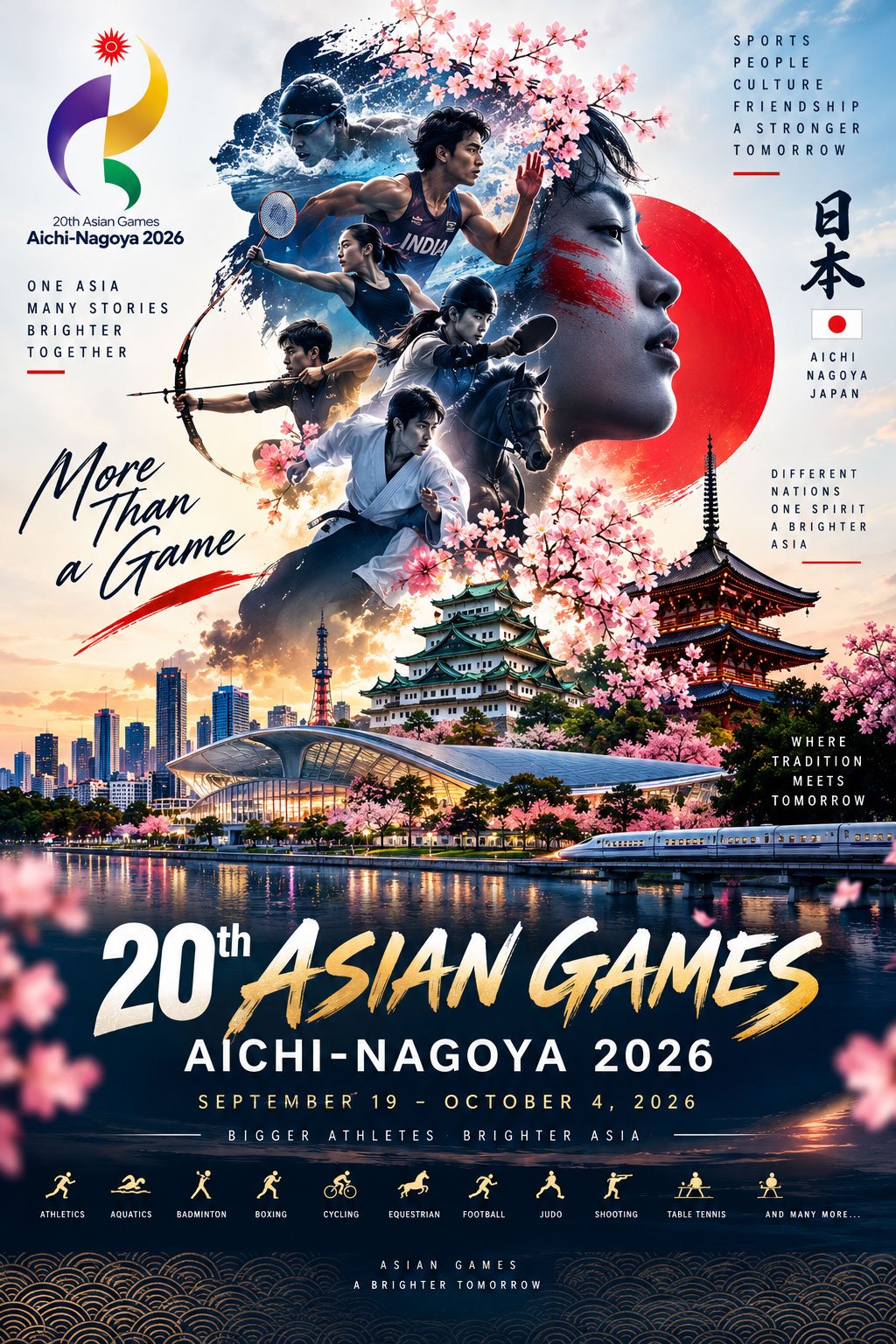
Aichi-Nagoya 2026: More Than a Sporting Event
The Asian Games are ultimately about competition, but their impact extends beyond medals.
They create connections between athletes, countries, sporting organisations, volunteers, fans and host communities.
Aichi-Nagoya 2026 is designed around that broader idea — combining sport with technology, culture, hospitality and international exchange.
For the athletes, it is about performance.
For the teams, it is about representing their countries.
For the fans, it is about unforgettable moments.
And for the next generation, it is an opportunity to see what is possible.
September 19 – October 4, 2026
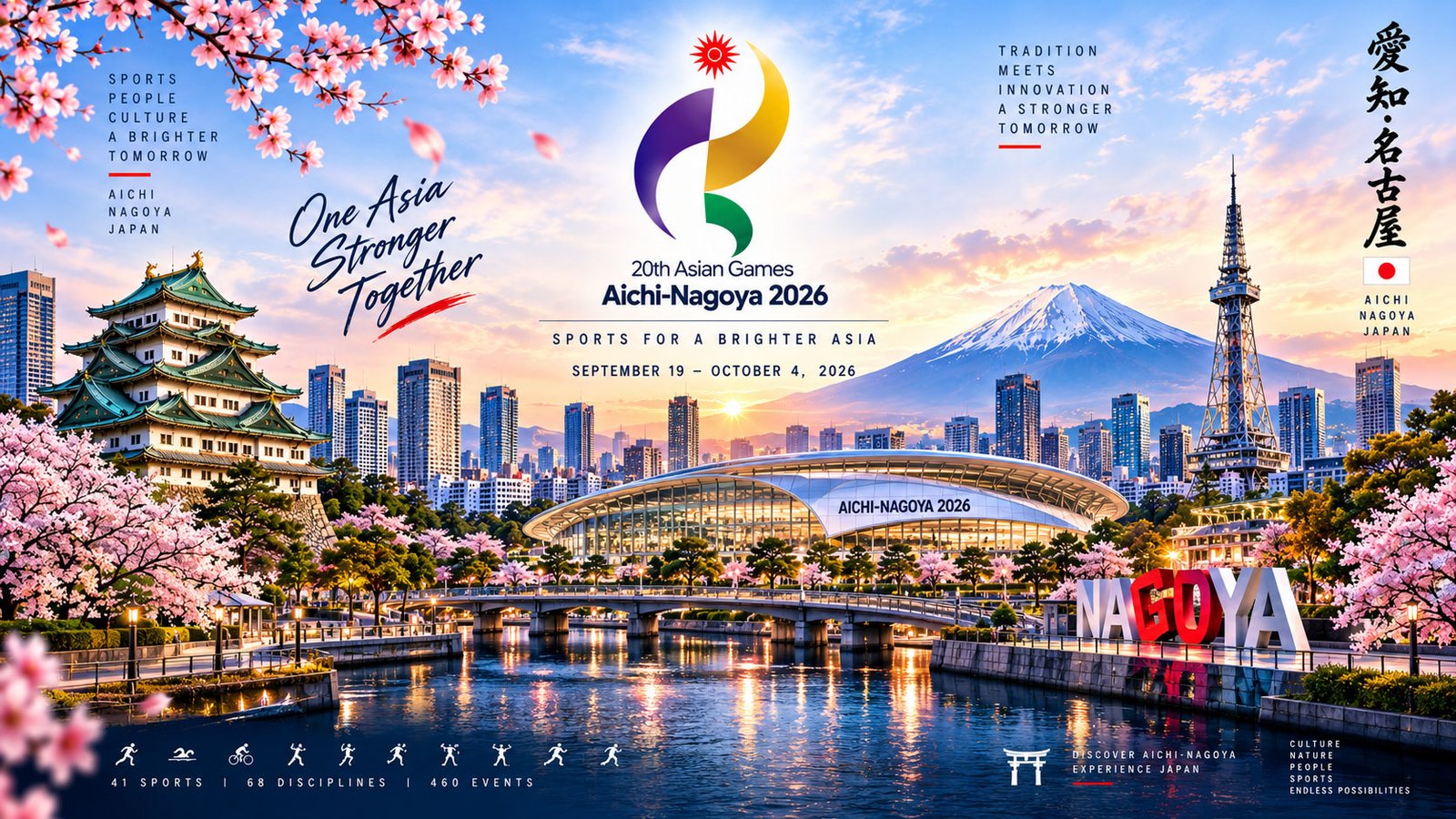
For 16 days, Aichi-Nagoya will become one of the world’s major sporting destinations.
Athletes will arrive with dreams.
Champions will attempt to defend their titles.
Young stars will look to announce themselves.
New sports will attract new audiences.
And established disciplines will once again produce the drama that makes sport so compelling.
The 20th Asian Games Aichi-Nagoya 2026 are ready to begin.
Asia’s athletes are ready.
Japan is ready.
#AsianGames2026 #AichiNagoya2026 #AsianGames #TeamIndia #IndianAthletes #SportsTube #Japan2026 #AsianSports #Nagoya2026 #Aichi2026 #Sports #Athletes





 English