India at the Olympics: From One Athlete in 1900 to a Nation of Champions – The Complete History
From Paris 1900 to Paris 2024 | 124 Years of Olympic Pride, Courage and Sporting Excellence
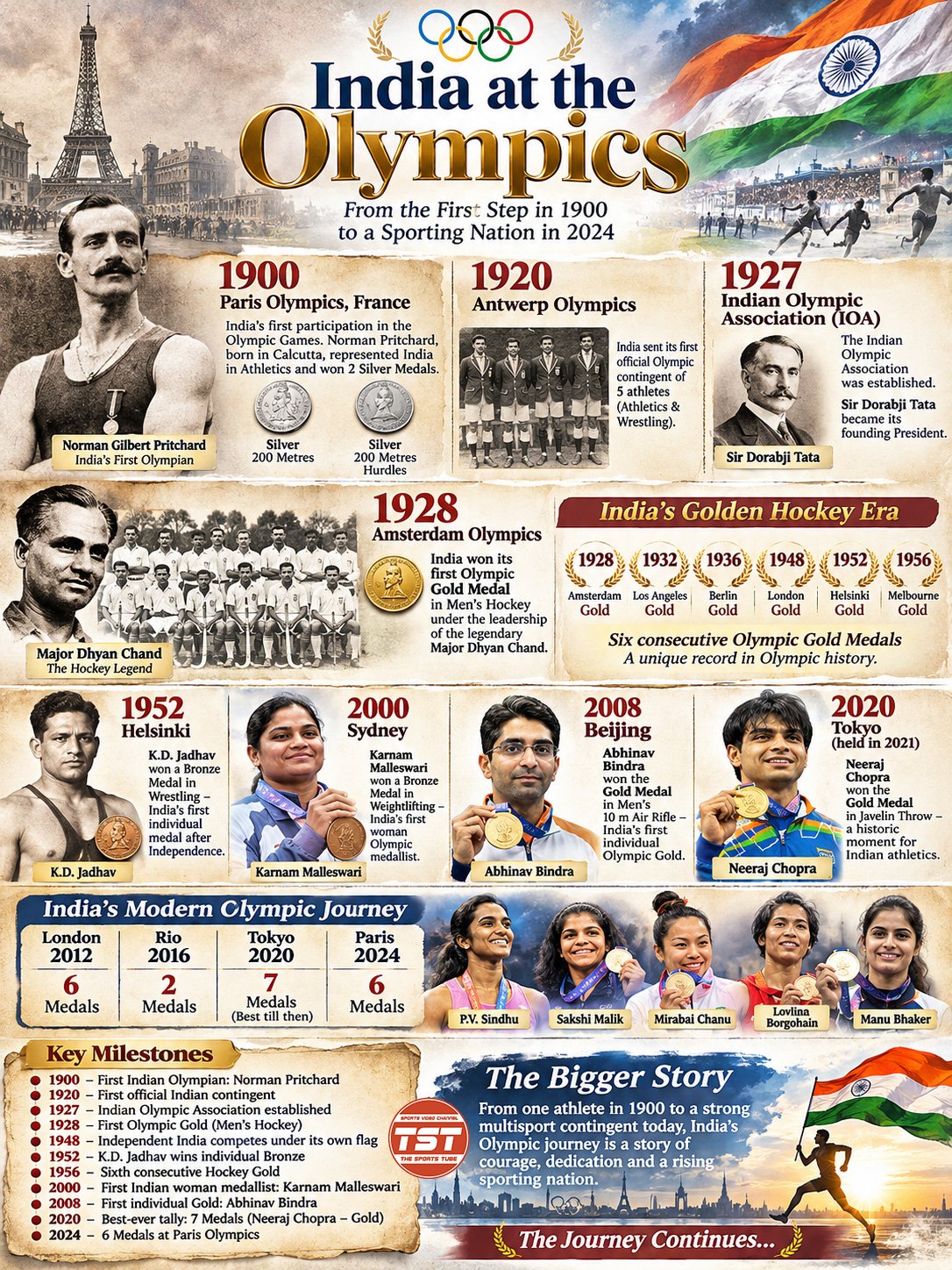
India’s Olympic journey is one of the most fascinating stories in world sporting history. It began with a single athlete at the Paris Olympic Games in 1900 and gradually evolved into a sporting movement representing millions of dreams, aspirations and national pride.
From Norman Pritchard’s historic silver medals to Major Dhyan Chand’s legendary hockey dominance, from Abhinav Bindra’s individual Olympic gold to Neeraj Chopra’s historic javelin triumph, India’s Olympic journey reflects the determination of generations of athletes.
But how did it all begin? Who was India’s first Olympic representative? When did India win its first Olympic medal? Who established the Indian Olympic Association? And how did India transform into a modern multi-sport Olympic nation?
Let’s explore the complete story.
1. The Beginning: India’s First Olympic Appearance in 1900
Paris, France – The year that started India’s Olympic history
The modern Olympic Games began in Athens in 1896. Four years later, India made its first recognised appearance at the second edition of the Summer Olympic Games in Paris, France, in 1900.
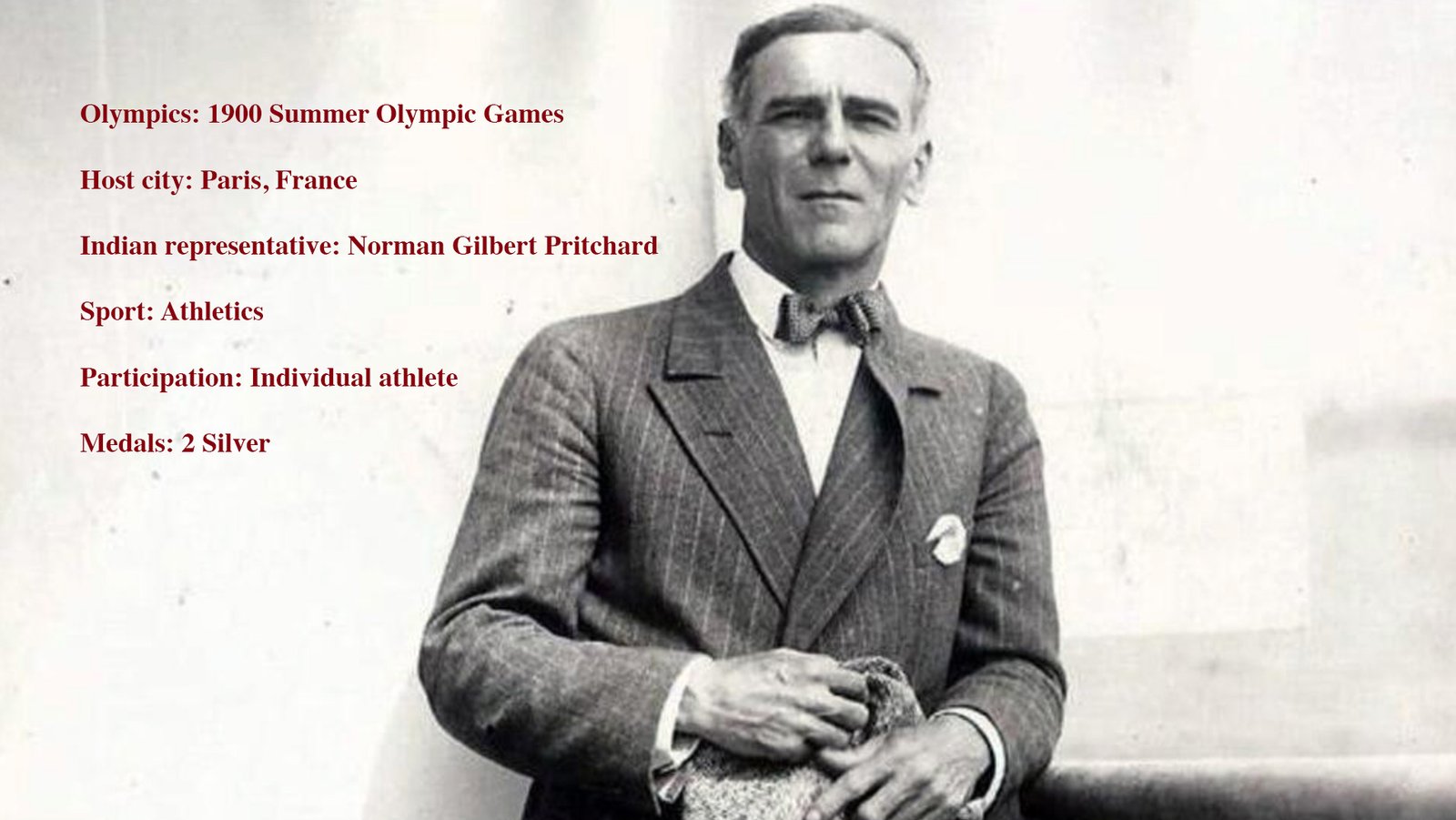
The name that entered Indian sporting history was Norman Gilbert Pritchard.
Born on 23 June 1875 in Calcutta (present-day Kolkata), British India, Pritchard was an accomplished athlete who competed in sprinting and hurdles.
He became the first known athlete representing India at the modern Olympic Games.
Norman Pritchard’s historic achievements
At the 1900 Paris Olympics, Pritchard competed in several athletics events and secured two silver medals.
- Men’s 200 metres: Silver medal.
- Men’s 200 metres hurdles: Silver medal.
These achievements made him India’s first recognised Olympic medallist.
His two silver medals marked the beginning of India’s medal-winning journey at the Olympic Games.
An interesting historical point: India did not have an established National Olympic Committee in 1900. Norman Pritchard’s Olympic representation and the national attribution of his medals have been discussed by historians. Nevertheless, the Indian Olympic Association recognises him as India’s first Olympic representative and the winner of India’s first two Olympic medals.
2. India’s First Organised Olympic Contingent – Antwerp 1920
Twenty years after Pritchard’s appearance, India took another important step towards organised participation in international sport.
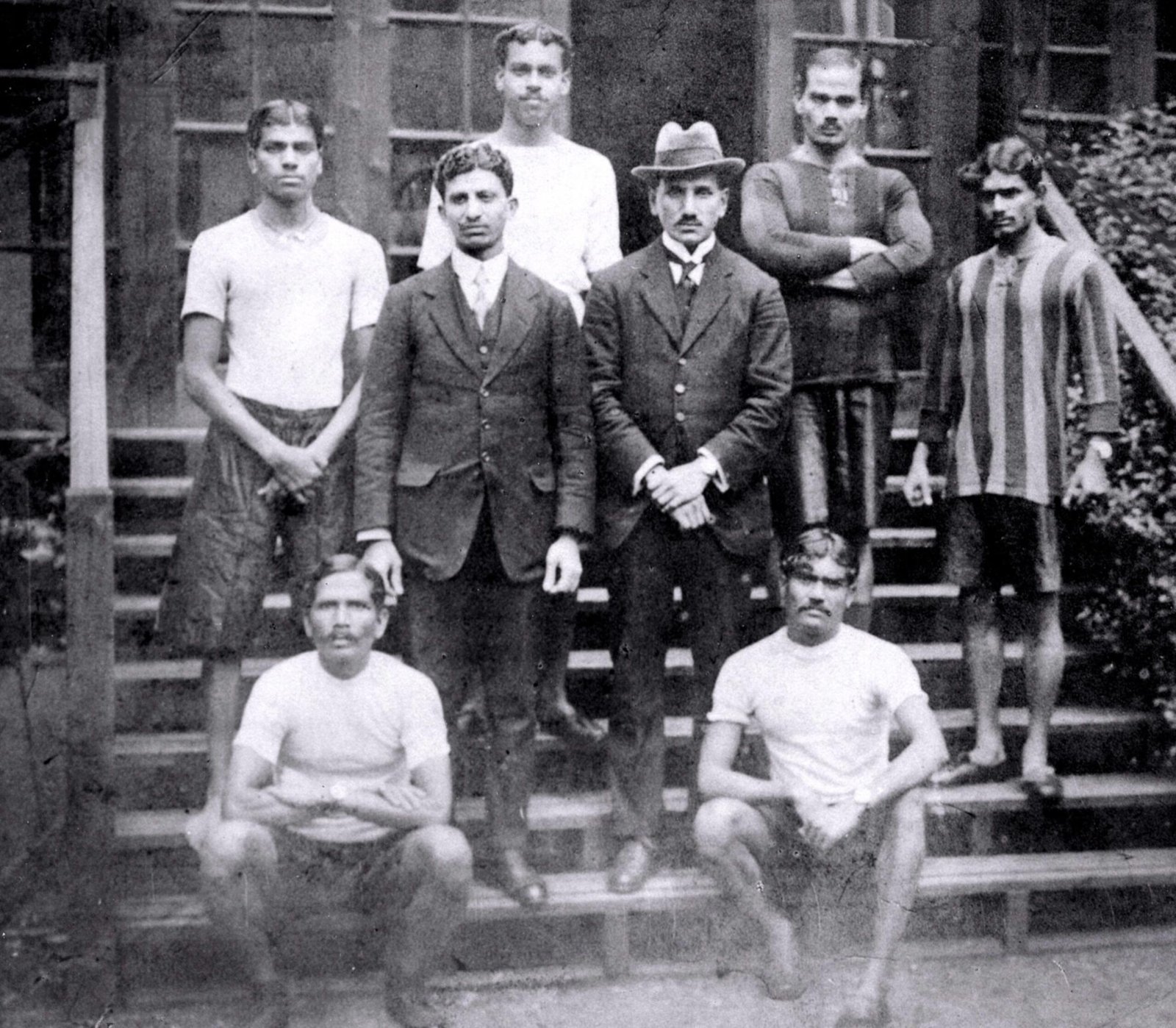
At the 1920 Summer Olympics in Antwerp, Belgium, India sent its first organised Olympic contingent.
The Indian contingent consisted of five athletes who competed in athletics and wrestling.
This was an important turning point. India’s participation was no longer simply about one individual athlete; it was developing into a structured national sporting effort.
The 1920 experience also helped inspire the creation of a permanent national organisation to coordinate India’s Olympic participation.
3.Sir Dorabji Tata and the Birth of India’s Olympic Movement
One of the most important personalities behind India’s early Olympic movement was Sir Dorabji Tata, a leading Indian industrialist and sports supporter.
He recognised that Indian athletes needed an organised national structure to compete consistently at international sporting events.
Following India’s participation in the 1920 and 1924 Olympics, efforts were made to establish a national Olympic organisation.
In 1923–24, a provisional All India Olympic Committee was established. It organised the All India Olympic Games in Lahore in February 1924.
This competition later developed into the National Games of India.
In 1927, the Indian Olympic Association (IOA) was formally established.
Its founding leadership included:
- Founding President: Sir Dorabji Tata.
- Founding Secretary: Dr A.G. Noehren.
The formation of the IOA created a permanent institutional foundation for India’s participation in the Olympic movement.
4. Amsterdam 1928: India’s First Olympic Gold Medal
A new chapter in Indian sporting history
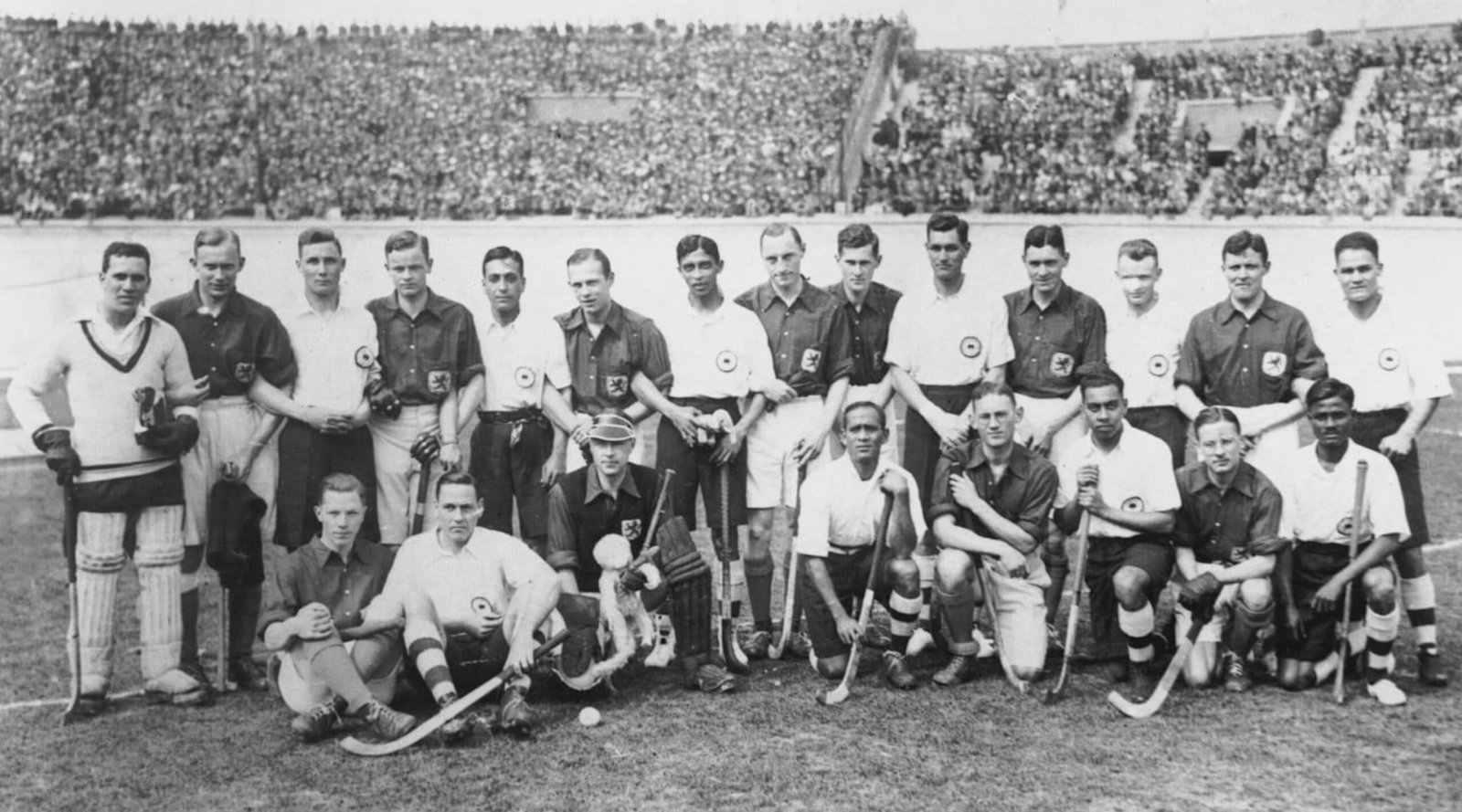
The 1928 Amsterdam Olympics in the Netherlands marked the beginning of India’s extraordinary Olympic hockey legacy.
The Indian men’s hockey team won its first Olympic gold medal, introducing the world to India’s remarkable hockey talent.
The legendary Major Dhyan Chand became the face of this golden era.
India dominated the competition, scoring 29 goals without conceding a single goal throughout the tournament.
In the final, India defeated the Netherlands 3–0.
This victory was not just a gold medal. It was the beginning of an extraordinary period of Indian sporting dominance.
Major Dhyan Chand – The Wizard of Hockey
Major Dhyan Chand remains one of the greatest hockey players in sporting history.
His exceptional ball control, tactical intelligence and extraordinary goal-scoring ability helped establish India’s international reputation in hockey.
His contribution became a defining chapter in the country’s Olympic legacy.
5. India’s Golden Hockey Era: Six Consecutive Olympic Gold Medals
Between 1928 and 1956, Indian men’s hockey achieved something extraordinary.
India won six consecutive Olympic gold medals.
| Year | Olympic Host City | Achievement |
|---|---|---|
| 1928 | Amsterdam | Gold |
| 1932 | Los Angeles | Gold |
| 1936 | Berlin | Gold |
| 1948 | London | Gold |
| 1952 | Helsinki | Gold |
| 1956 | Melbourne | Gold |
The first three victories came before India’s independence, while the next three came after independence.
This remarkable record established India as one of the most successful hockey nations in Olympic history.
London 1948 – A Gold Medal Under the Indian Tricolour
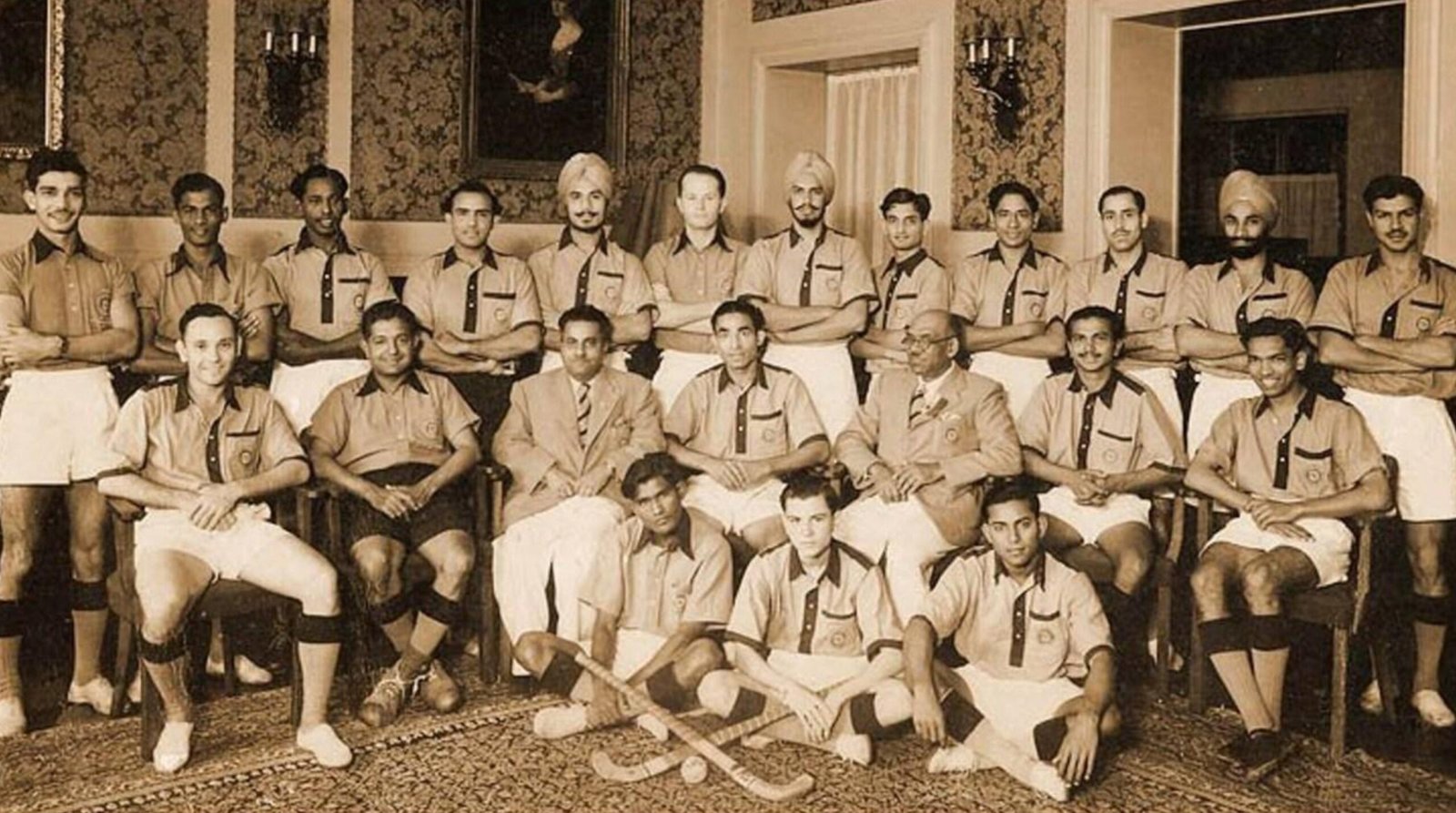
The 1948 London Olympics were particularly special.
Independent India participated under its own national flag for the first time at the Summer Olympic Games.
In the men’s hockey final, India defeated Great Britain 4–0 to win the gold medal.
It was a moment of immense national pride.
For a newly independent nation, this victory represented much more than sporting success. It symbolised confidence, identity and national achievement.
6. Helsinki 1952: K.D. Jadhav Makes History
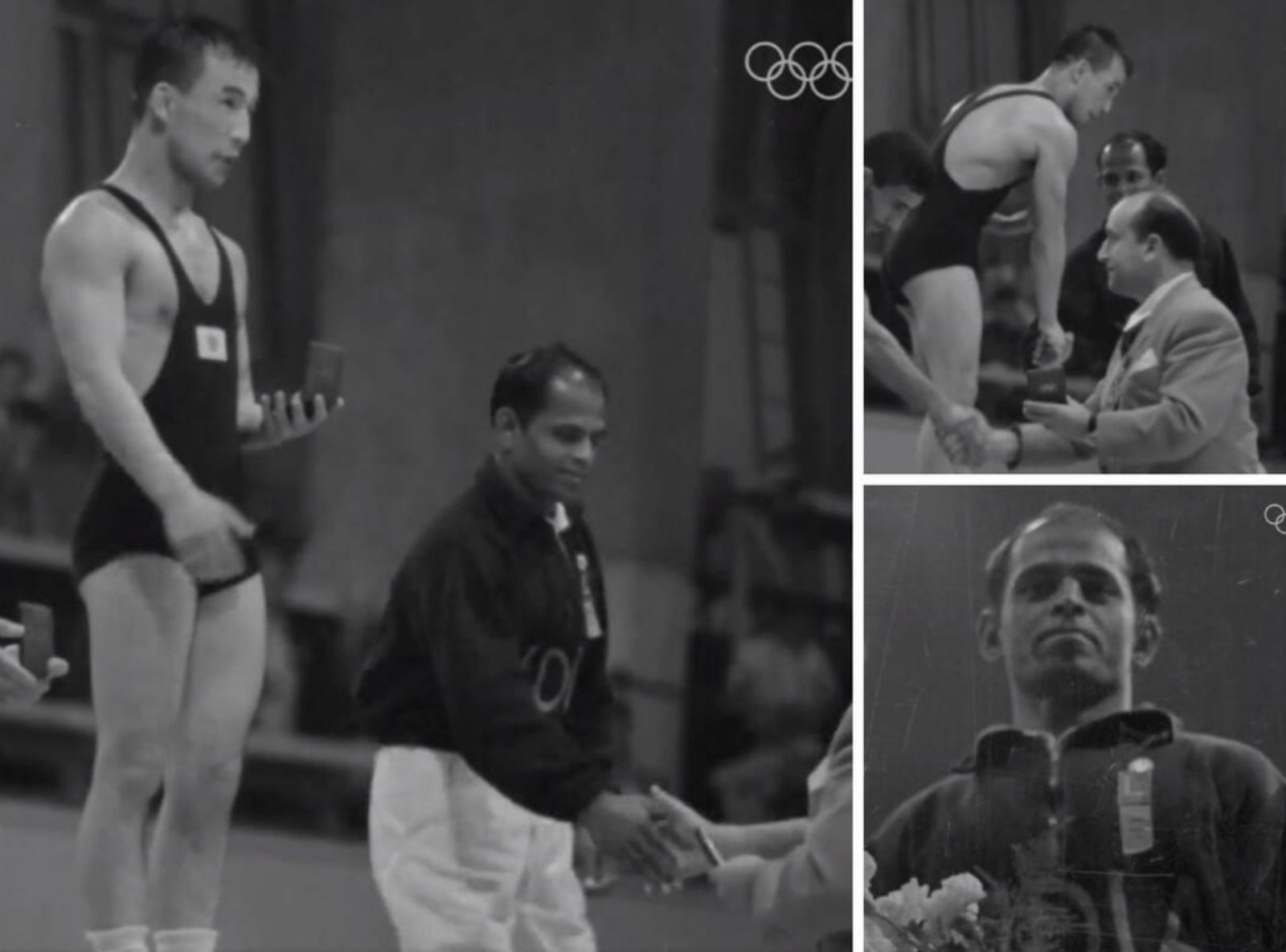
India’s Olympic success was not limited to hockey.
At the 1952 Helsinki Olympics in Finland, wrestler Khashaba Dadasaheb Jadhav, popularly known as K.D. Jadhav, won a bronze medal in freestyle wrestling.
He became the first individual Olympic medallist of independent India.
His achievement was remarkable because he overcame considerable financial and training difficulties to compete at the highest international level.
K.D. Jadhav opened the door for future generations of Indian wrestlers.
His legacy remains an important part of Indian Olympic history.
7. India’s First Woman Olympic Medallist – Karnam Malleswari, 2000
The Sydney 2000 Olympics marked another historic milestone.
Indian weightlifter Karnam Malleswari won a bronze medal in the women’s 69 kg category.
She became the first Indian woman to win an Olympic medal.
Her achievement was a turning point for women’s sports in India.
She inspired countless young women to pursue professional sporting careers and dream of representing India internationally.
8. Beijing 2008: Abhinav Bindra Wins India’s First Individual Olympic Gold
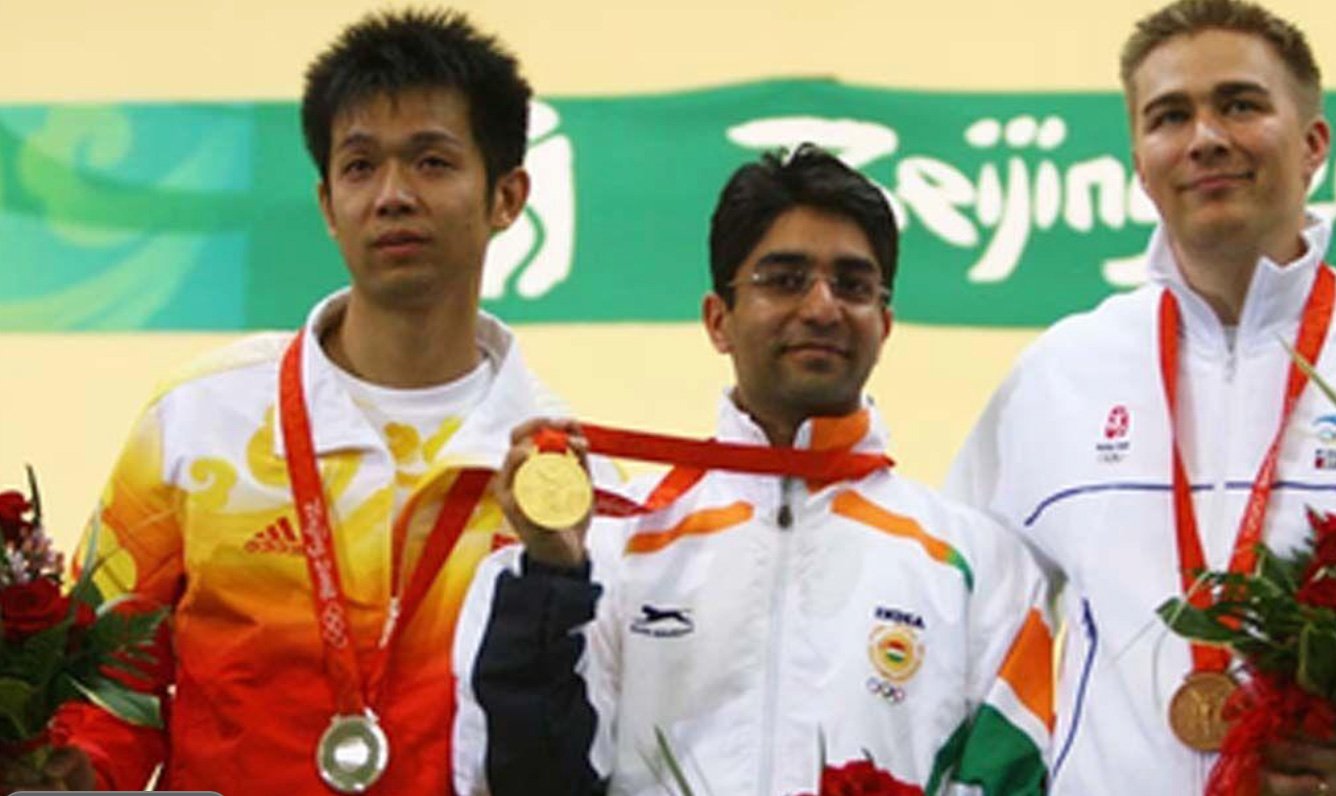
At the Beijing 2008 Olympic Games, Indian shooting history was rewritten.
Abhinav Bindra won the gold medal in the men’s 10-metre air rifle event.
He became the first Indian athlete to win an individual Olympic gold medal.
His victory was a landmark achievement for Indian shooting and Olympic sport.
It demonstrated that India could produce individual Olympic champions beyond its traditional strength in hockey.
9. India’s Olympic Transformation: 2012–2024
The modern era brought a wider range of Indian sporting achievements.
Athletes from wrestling, badminton, boxing, shooting, athletics, weightlifting and other disciplines began making their mark internationally.
London 2012 – Six Olympic Medals
India won six medals at the London Olympics.
The medal winners included:
- Vijay Kumar – Silver, shooting.
- Sushil Kumar – Silver, wrestling.
- Gagan Narang – Bronze, shooting.
- Saina Nehwal – Bronze, badminton.
- Mary Kom – Bronze, boxing.
- Yogeshwar Dutt – Bronze, wrestling.
It was India’s best Olympic medal tally at that time.
Rio 2016 – The Rise of Indian Women Athletes
India won two medals at the Rio Olympics.
- P.V. Sindhu – Silver, badminton.
- Sakshi Malik – Bronze, wrestling.
P.V. Sindhu became the first Indian woman to win an Olympic silver medal.
Sakshi Malik became the first Indian woman wrestler to win an Olympic medal.
Tokyo 2020 – India’s Historic Seven-Medal Campaign
The Tokyo Olympics, held in 2021 because of the COVID-19 pandemic, became a landmark edition for Indian sport.
India won seven medals, its best-ever Olympic medal tally at that time.
One name stood above the rest:
Neeraj Chopra – Olympic Gold in Men’s Javelin Throw.
He became the first Indian athlete to win an Olympic gold medal in athletics.
Other medal-winning achievements included:
- Mirabai Chanu – Silver, weightlifting.
- Ravi Kumar Dahiya – Silver, wrestling.
- Lovlina Borgohain – Bronze, boxing.
- P.V. Sindhu – Bronze, badminton.
- Indian men’s hockey team – Bronze.
- Bajrang Punia – Bronze, wrestling.
The Indian men’s hockey team’s bronze medal was particularly significant because it ended a 41-year wait for an Olympic hockey medal.
Paris 2024 – Six More Olympic Medals
India sent 117 athletes to the Paris 2024 Olympics and won six medals: one silver and five bronze.
Some of the biggest highlights included:
Manu Bhaker: Won two bronze medals in shooting, becoming the first Indian athlete in independent India’s Olympic history to win two medals in a single edition of the Games.
Neeraj Chopra: Won silver in men’s javelin throw, becoming the first Indian track-and-field athlete to win two Olympic medals.
Indian men’s hockey team: Won bronze, securing back-to-back Olympic medals after Tokyo 2020.
Other medal winners included:
- Swapnil Kusale – Bronze, shooting.
- Aman Sehrawat – Bronze, wrestling.
- Indian men’s hockey team – Bronze.
Paris 2024 demonstrated the growing strength and diversity of India’s Olympic participation.
10. India’s Recent Olympic Medal Performance
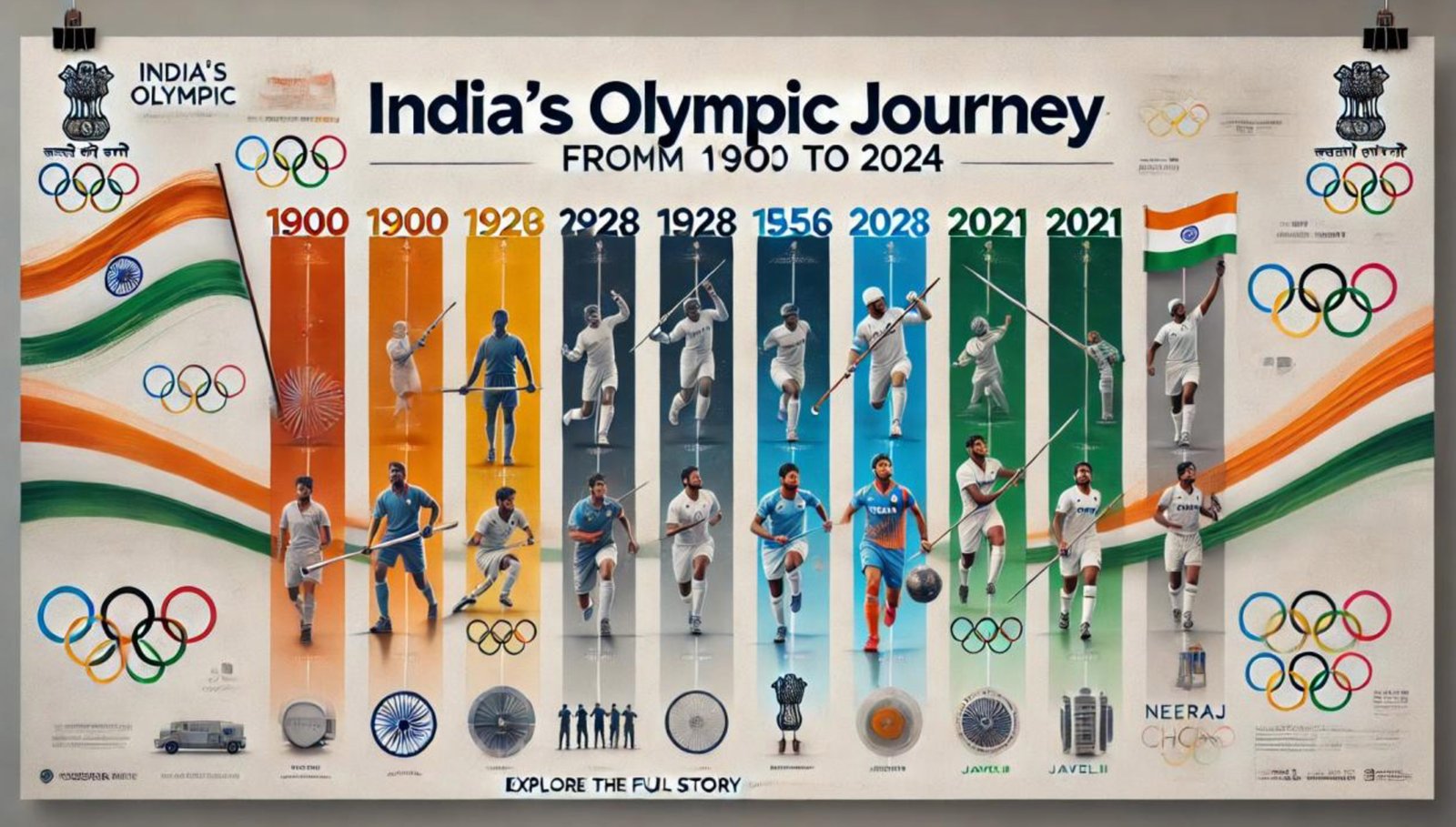
The following table highlights India’s performance across four recent Summer Olympic editions.
| Olympic Games | Host City | Total Medals |
|---|---|---|
| 2012 | London | 6 |
| 2016 | Rio de Janeiro | 2 |
| 2020 | Tokyo | 7 |
| 2024 | Paris | 6 |
Tokyo 2020 remains India’s best-performing Summer Olympics in terms of total medals.
These results reflect the growing participation of Indian athletes across multiple sporting disciplines.
11. India’s Olympic Journey – A Timeline of Historic Milestones
- 1900: Norman Pritchard becomes India’s first recognised Olympic representative.
- 1920: India sends its first organised Olympic contingent.
- 1923–24: Provisional All India Olympic Committee is established.
- 1927: Indian Olympic Association is formally established.
- 1928: India wins its first Olympic gold in men’s hockey.
- 1948: Independent India wins Olympic hockey gold under its own flag.
- 1952: K.D. Jadhav wins India’s first individual Olympic medal after independence.
- 1956: India secures its sixth consecutive Olympic hockey gold.
- 1980: India wins its eighth and latest Olympic men’s hockey gold in Moscow.
- 2000: Karnam Malleswari becomes India’s first woman Olympic medallist.
- 2008: Abhinav Bindra wins India’s first individual Olympic gold.
- 2012: India wins six Olympic medals in London.
- 2016: P.V. Sindhu wins silver and Sakshi Malik wins bronze.
- 2020: India wins seven medals, including Neeraj Chopra’s historic athletics gold.
- 2024: India wins six medals at the Paris Olympics.
12. The Bigger Story: From One Athlete to a Sporting Nation
India’s Olympic journey is not simply a story about medals.
It is a story about generations of athletes who challenged limitations, overcame obstacles and carried the Indian flag onto the world’s biggest sporting stage.
In 1900, India had one recognised Olympic representative.
In 1920, India began sending organised contingents.
In 1928, Indian hockey became a global sporting force.
In 2008, an individual Indian athlete won Olympic gold.
In 2020, India recorded its best-ever Olympic medal tally.
In 2024, Indian athletes continued to demonstrate their strength across multiple disciplines.
The journey from Norman Pritchard to Neeraj Chopra represents more than a century of sporting evolution.
India’s Olympic dreams are growing, and the next generation of athletes is preparing to write new chapters in this extraordinary story.
From one athlete in Paris to a nation of champions – India’s Olympic journey continues!
Conclusion
The Olympic Games have given India some of its greatest sporting heroes.
Major Dhyan Chand, K.D. Jadhav, Karnam Malleswari, Abhinav Bindra, P.V. Sindhu, Mirabai Chanu, Neeraj Chopra and countless other athletes have contributed to this remarkable sporting legacy.
Their achievements remind us that Olympic success is built through dedication, discipline, sacrifice and national pride.
The next Olympic chapter is waiting to be written.
🇮🇳 One Nation. One Tricolour. Millions of Dreams.
The Sports Tube – Sports Visual Stories Teller
Historical Sources and Further Reading
- Indian Olympic Association – History: https://olympic.ind.in/history/
- Indian Olympic Association – Paris 1900: https://olympic.ind.in/international-game/summer-olympics-games-paris-france-1900/
- Indian Olympic Association – Organisation: https://olympic.ind.in/organisation/
- Press Information Bureau – India at Olympics: https://www.pib.gov.in/PressReleaseIframePage.aspx?PRID=2036514&lang=2®=48
- Sports Authority of India – India’s History in Olympics.
Historical note: The 1900 Paris participation is recognised by the Indian Olympic Association. The organisational development of India’s Olympic representation took place over several stages between 1920 and 1927.





 English